Blog

Information

Where does the rubbish on our beach come from?

© Victoria Barrell/Sussex Wildlife Trust

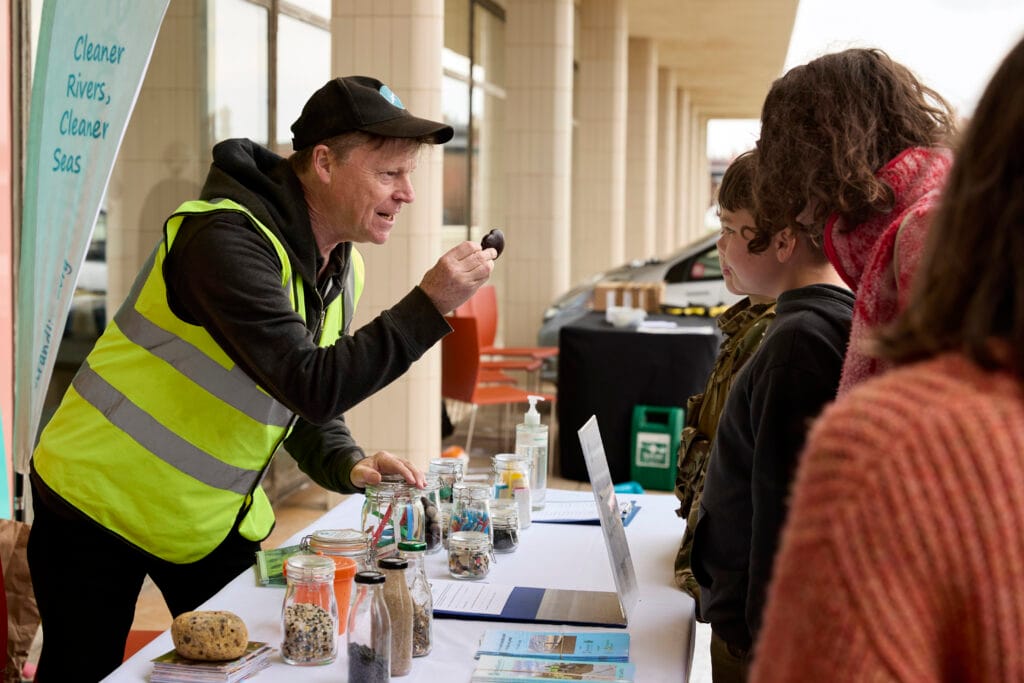
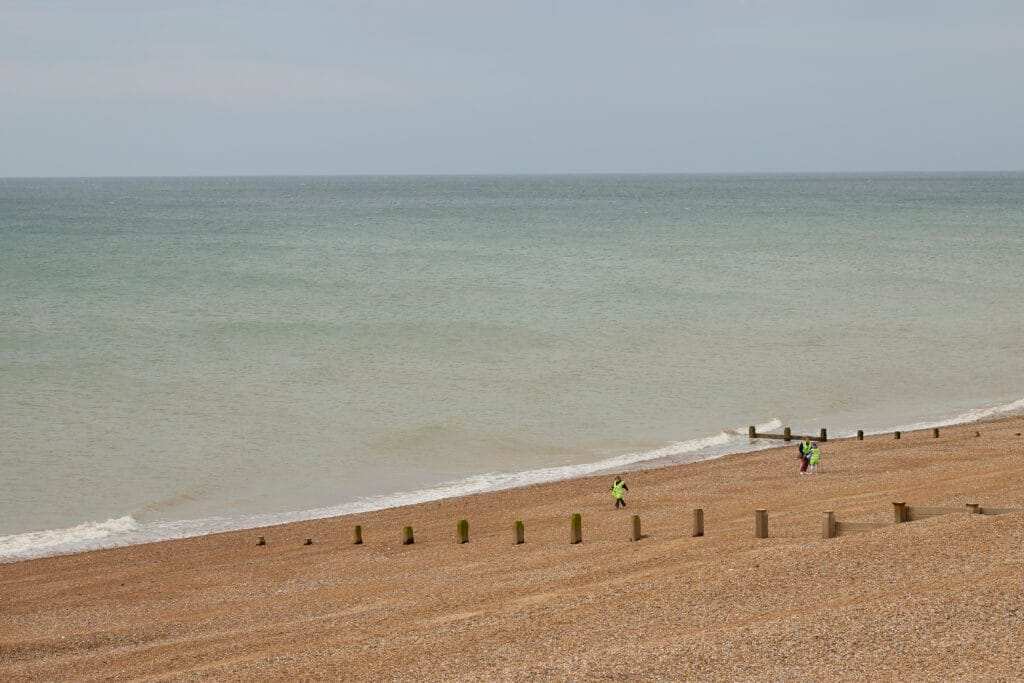
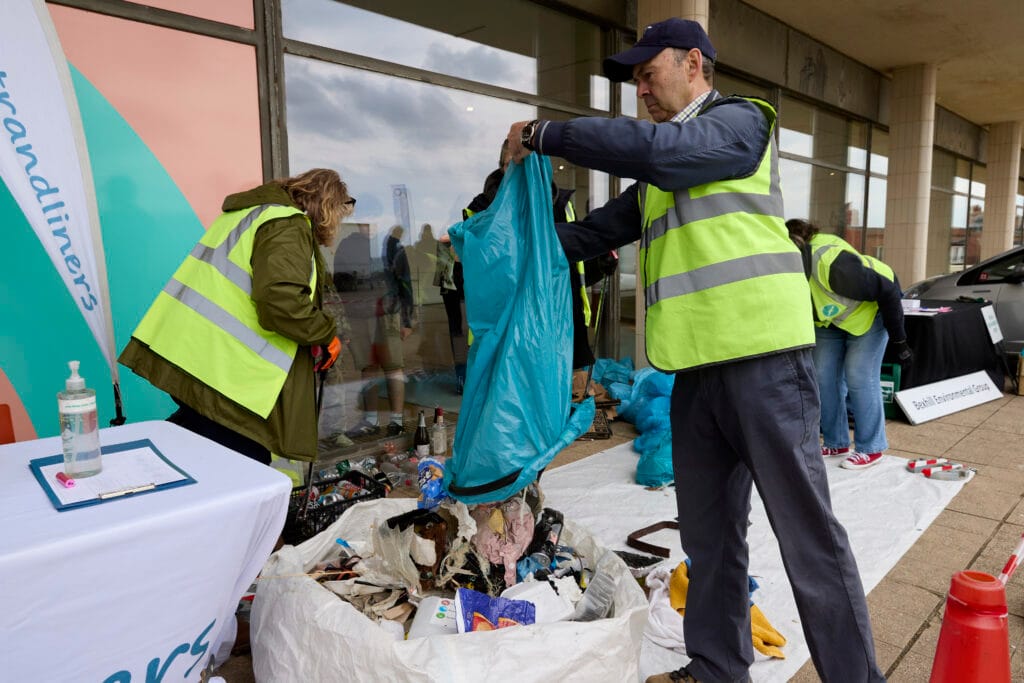
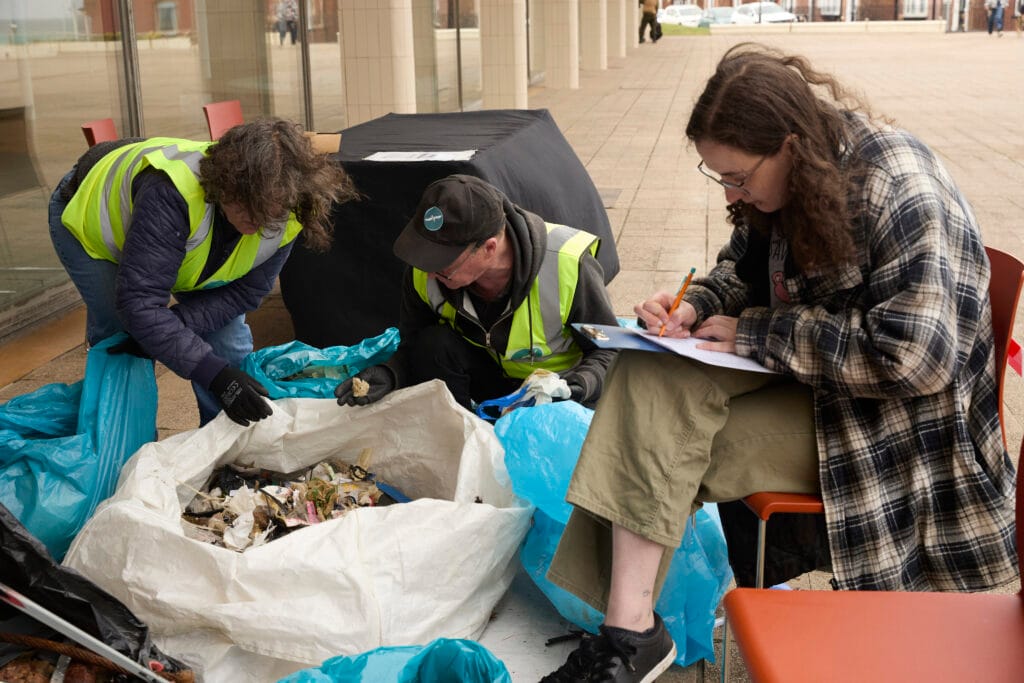
As part of the Attenborough Awareness Day event at the De La Warr Pavilion in Bexhill, celebrating David Attenborough’s 100th birthday, volunteers from Bexhill Environmental Group carried out a beach clean along Bexhill beach, and Strandliners undertook a brand audit of the rubbish, using the Million Mile Clean survey from Surfers Against Sewage (SAS).

What is a brand audit?
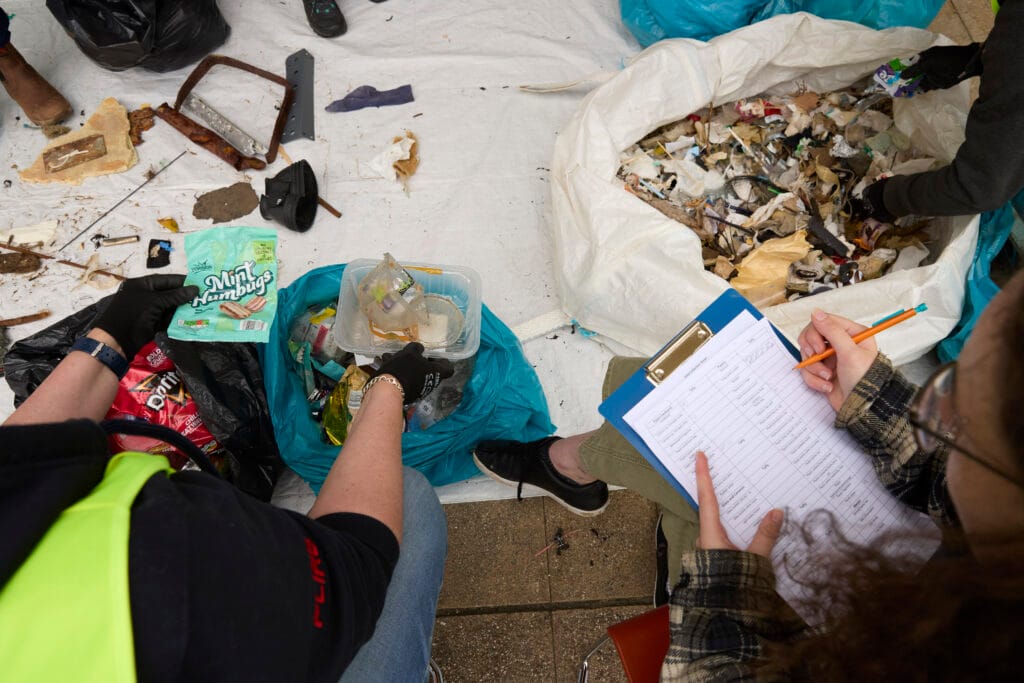
A brand audit is a citizen science initiative that involves counting and recording the brands found on litter to help identify the companies responsible for plastic pollution. The #BreakFreeFromPlastic methodology is also a record of the most common plastic polymers being produced and discarded. It can help improve the sustainability of companies and reduce unnecessary plastic. We can all do a brand audit at home or at work.
© Victoria Barrell/Sussex Wildlife Trust

What did we find?
In a two-hour clean-up (from Cooden Beach to Glyne Gap) 55 volunteers found 3,545 items. The survey identifies items by material e.g. plastic or by use e.g. smoking.
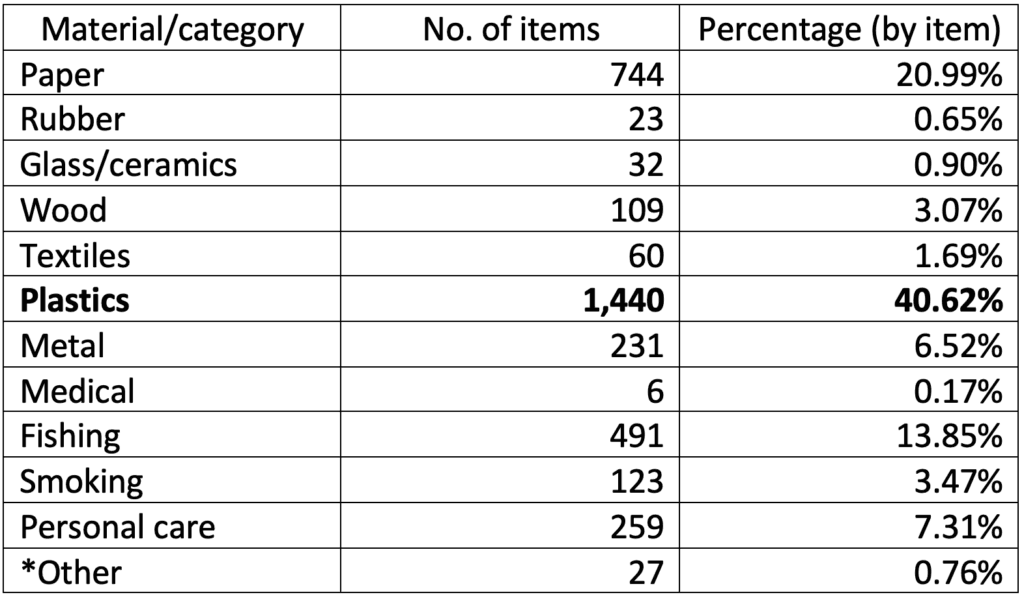
*Other includes anything that does not fit into any of the above categories
© Victoria Barrell/Sussex Wildlife Trust

What does this tell us?
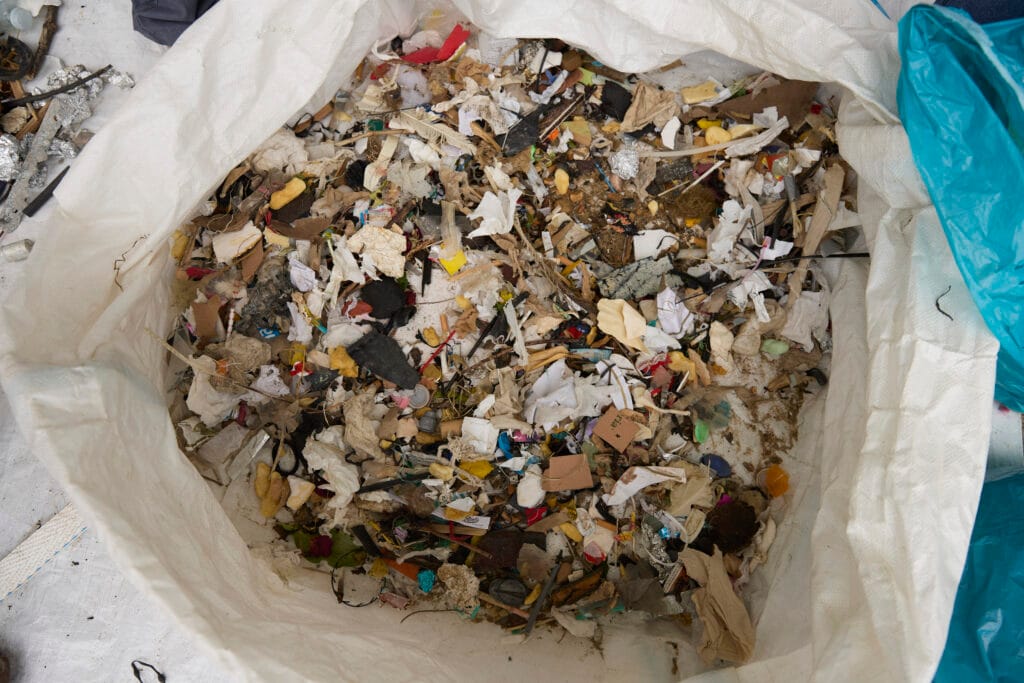
Not much, apart from the fact that there was an awful lot of rubbish found on what usually appears to be a clean beach – it is picked every morning by the local council, and potentially by beach visitors. Plastic is by the most commonly used material found. But what else do we know? We need to delve deeper.

Personal care
Among the most unpleasant items found were large amounts of toilet paper and wet wipes, some of which contained human excrement. This may sometimes happen if there are no toilets, but there are three public facilities along the sea front, which are all open (although the opening hours may be limited).

Brands
Over 600 branded items were identified, far higher than normal, but no brands were outstanding as the worst polluters. Only two brands had more than 20 items (Cadbury and McDonald’s); a few more had more than 10 items (Aldi, Tesco, Coca-Cola, Nestlé, Marlboro and a local restaurant) and many of the brands had just one or two items. In fact there were almost 300 different brands identified! This shows us that all brands are part of the problem.
© Victoria Barrell/Sussex Wildlife Trust

If we reorganise the items into categories used by #BreakFreeFromPlastic and the Preventing Plastic Pollution project in the Rother catchment, we can compare the data with past Strandliners’ surveys.
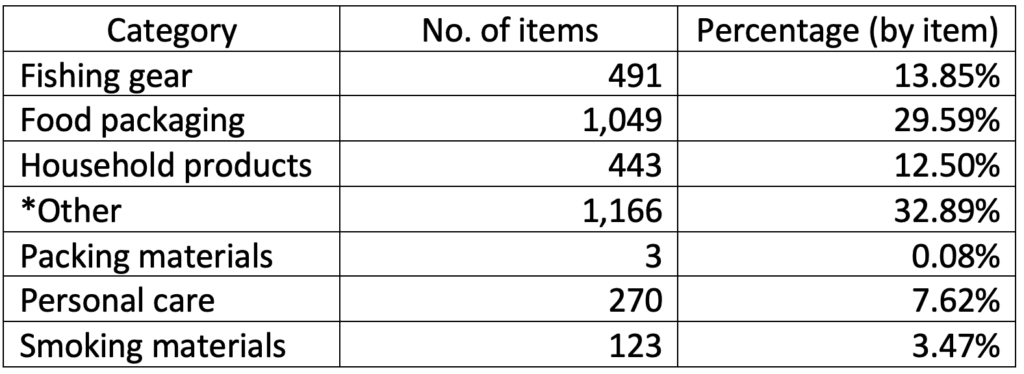
*Other includes balloons, microplastics, plastic fragments and small unidentifiable pieces
© Victoria Barrell/Sussex Wildlife Trust

A pie chart gives us a visual representation of the data and lets us compare easily areas easily.
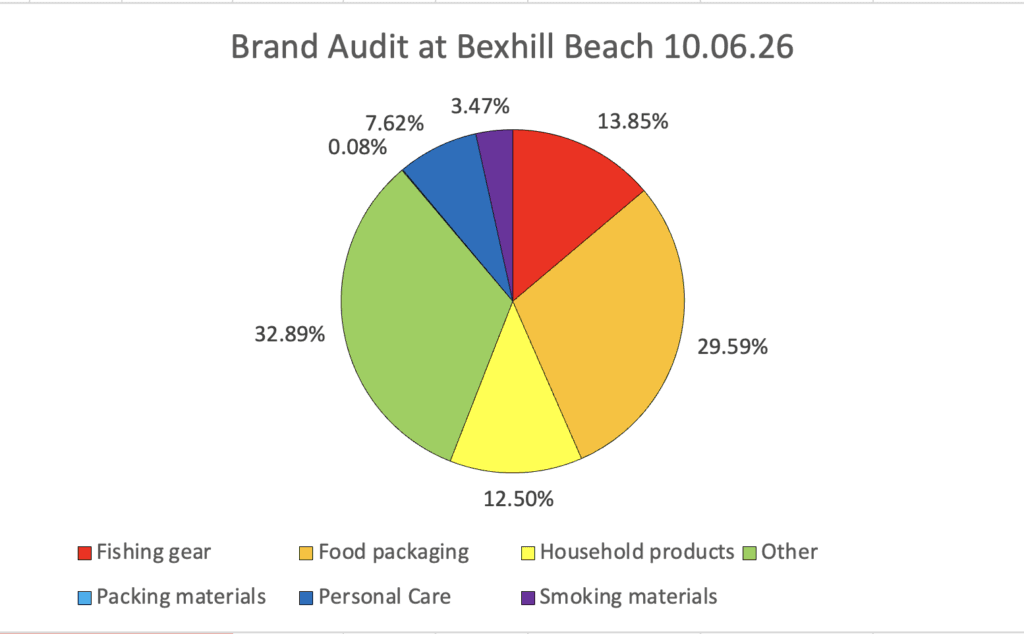
Fishing items
These are to be expected along the busy English Channel. Generally, we cannot tell where they came from, although we did find a few tags from a Newhaven-based boat in this survey, and we do occasionally find items from North America. We have to remember that things may not be discarded deliberately; when out in a rough sea, it is not easy to keep hold of everything!

Food packaging
This is typically one of the highest categories in a brand audit survey. While there are many sources of litter on our beaches, the amount of takeaway packaging (particularly fish and chip packaging and local restaurant packaging) and associated items such as napkins, suggests that food eaten on the beach can cause issues. We found a till receipt from a bar in Spain, and a bistro in France (though they probably crossed the channel in someone’s pocket!). One food packaging item from the 1980’s was found: a Smarties lid embossed with Rowntrees (before Nestle took over and changed the branding to Smarties). See our blog on Smartie lids.

Container spills
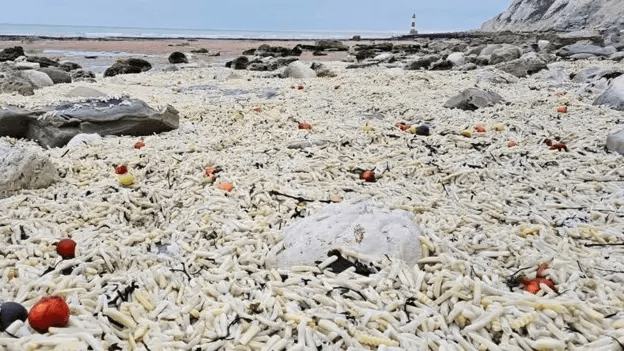
In this survey, the ‘other’ category was very high. This was partly due to the many small pieces of foam insulation from the refrigerated containers lost at sea last winter (see our blog). Whilst most of the large pieces of foam were picked up and disposed of shortly after the event, small pieces will be found for many years to come. We are still finding items from historic container spills; in this survey an item from a 2007 container spill was found by an eagle-eyed BEG volunteer.

Litter from many sources
Although in this case it seems like much of the litter was from the public, beach visitors, and food eaten on the beach, one surprising item was a piece of detonation cord or shock tubing used by the US Army Corps of Engineers when Boston Harbour in Massachusetts was dredged in 2021/22 to make the harbour deeper, allowing bigger ships to enter. Strandliners have been finding this tubing since 2023, although fewer pieces are washing up now.  See our blog on detonation cord here.
© Victoria Barrell/Sussex Wildlife Trust

If you’d like to know more about the SAS brand audit, you can read their 2025 report here.
Information

Queens of the Rother

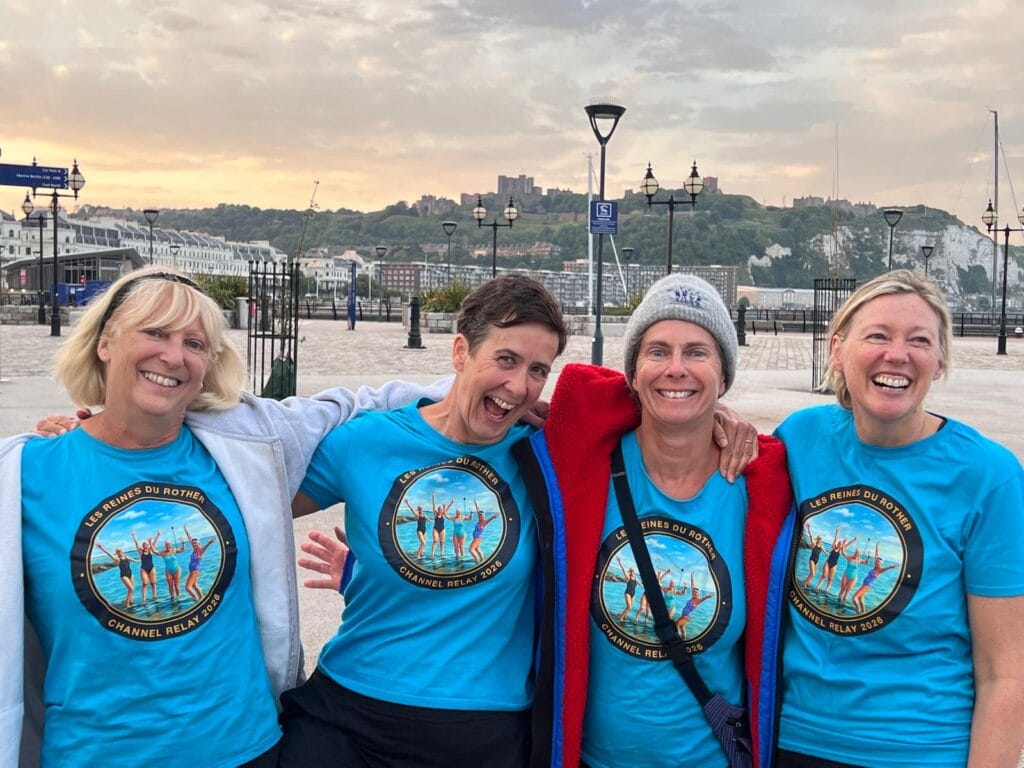
Les Reines du Rother are swimmers who care deeply about water quality. Swimming the River Rother and becoming increasingly aware of the issues our rivers and sea face led to the thought: what can we do to attempt to make a difference?

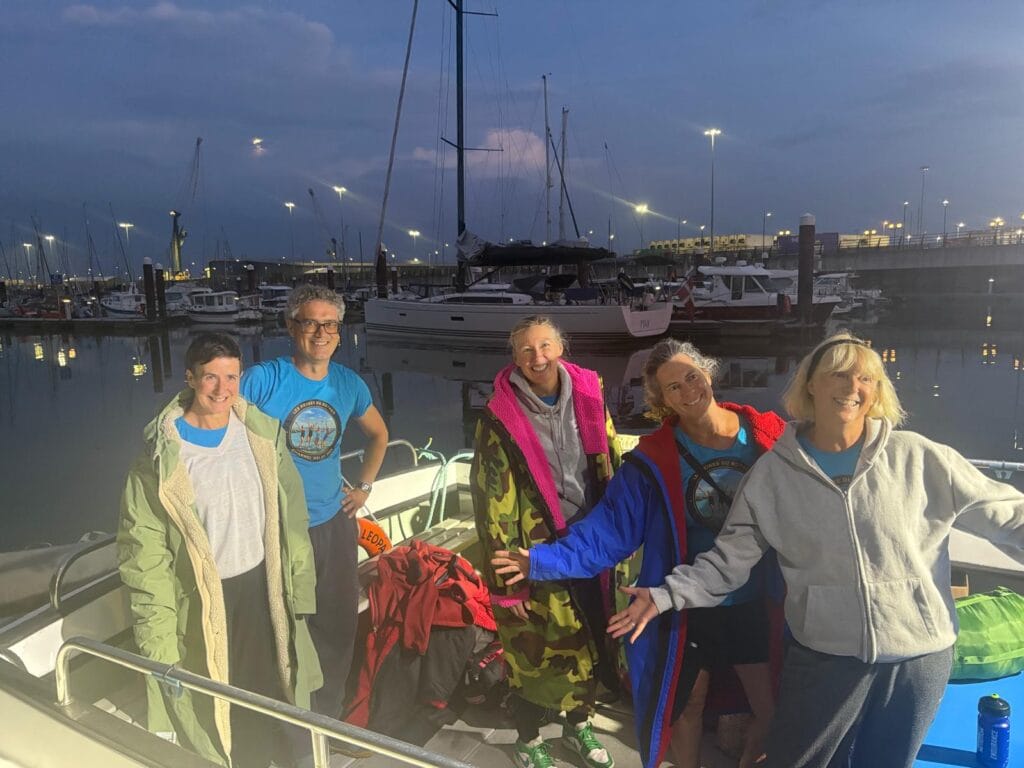
Isabelle Lavigne, Katherine Drew, Sophia Bartleet and Claire Reed, who all live in West Kent, decided to swim the English Channel to raise money for both Strandliners and Surfers Against Sewage. Strandliners is a Rye-based group that collects data on rubbish and monitors water quality to use as evidence for larger groups to lobby for change. Surfers Against Sewage provides a national water quality app and campaigns for water companies and polluters to be held responsible for what they put in our water.

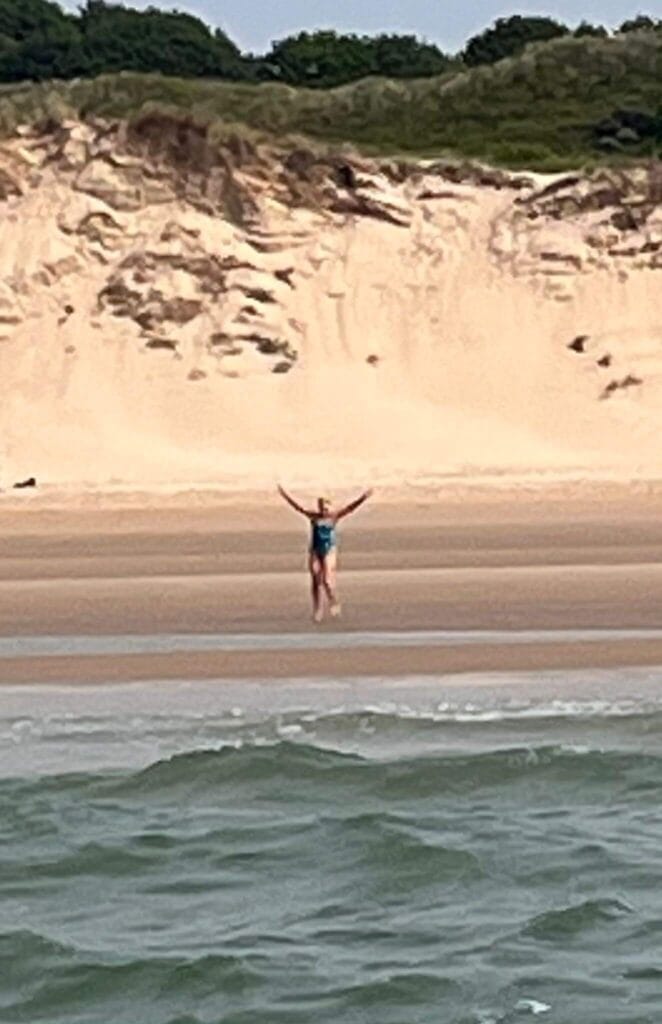
Anxious smiles hours before the start

The team, whose name was inspired by Isabelle’s nationality, was trained by veteran Channel swimmer Tony Ferguson, whose experience and encouragement were invaluable. Claire says: “The swim was way out of my comfort zone, but I realised if I didn’t try this, I would always regret it. There were times during training when we had to clear rubbish left by others before we got into the water. Strandliners and Surfers Against Sewage are working hard to put pressure on the water companies and government to clear up our rivers and seas, so we chose to raise funds to help with this important mission.”

Months of training, including swimming the River Rother in all conditions, preceded the planned departure date in June. A few ‘double dip’ sessions in Dover Harbour aimed to simulate the experience of a relay when each member of the group swims for an hour and then warms up for three hours before returning to the water – repeating four or five times until France is reached! As Sophia says of the Dover training: “The water was a brutally cold 14 degrees, so we weren’t quite so smiley second time around!”

Planning to set off in late June, the team booked a practice session with the piloting boat and team in Dover for Saturday 30th May. When they messaged Stuart Gleeson, the pilot, to finalise the details he suggested that they could embark on the crossing itself that weekend because the forecast conditions were so good. Sophia says: “It was quite a surprise for all of us, but we knew that the weather in the Channel is very unpredictable, so it was worth going for it while it was so calm.”

Les Reines du Rother on board and ready for a team talk before setting off

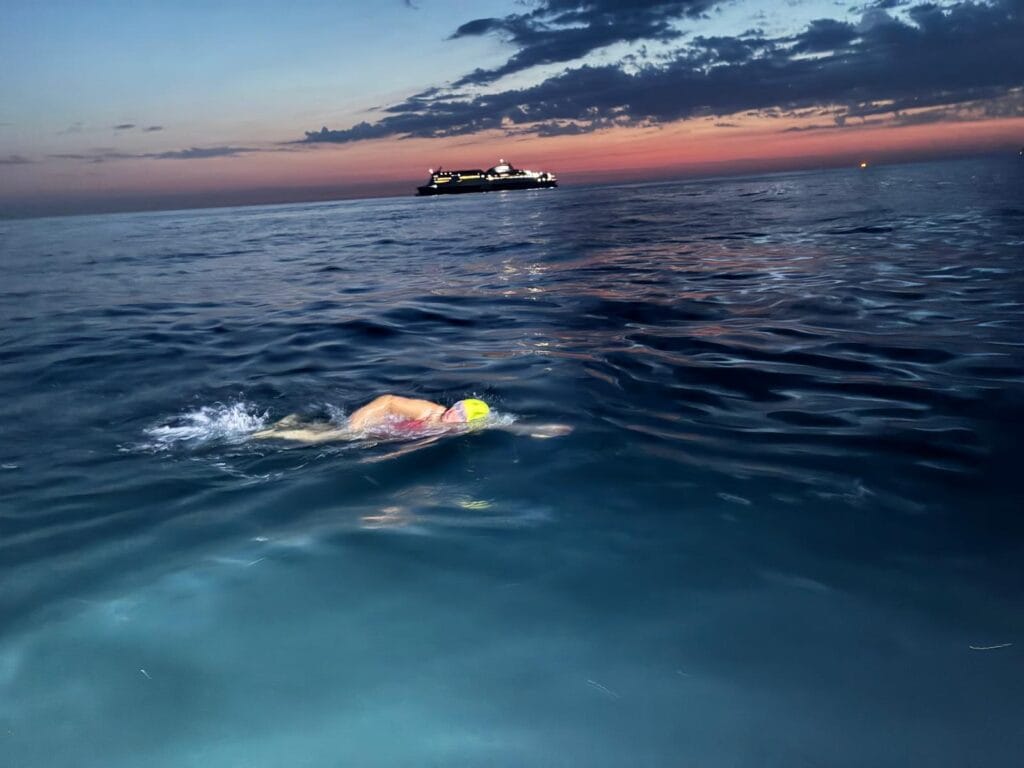
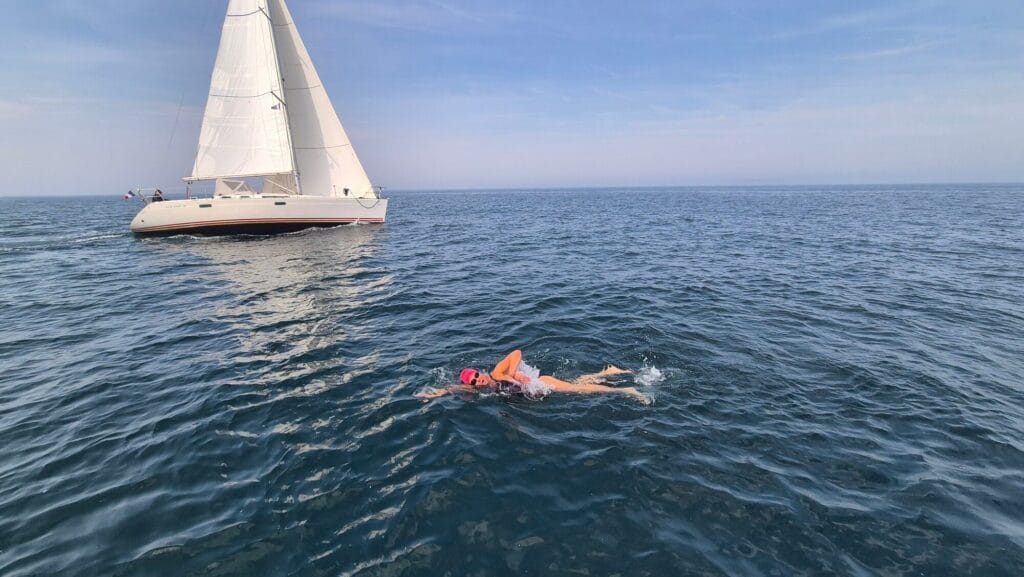
With just 48 hours’ notice, the team set off from Samphire Ho on Friday 29th May just before 11pm, with Claire taking the first leg, to be followed by Sophia, Katherine and Isabelle. When not swimming, the task was to encourage the person in the water, as well as help warm up whomever had just come out – no easy task in very cold-water conditions. Also on board the Sea Leopard was its pilot and crew, trainer Tony and an observer from the Channel Swimming Association (CSA), who ensures official regulations are adhered to!

The rules stipulate that swimmers can only wear a costume, swimming hat and goggles (no wetsuit) – this is to ensure that the conditions are the same as those experienced by the very first Channel swimmer, Captain Matthew Webb in 1875.

There is much to consider when deciding whether to take on this challenge, but the Channel Swimming Association (CSA) helps immensely, providing answers to all those questions you may have: how long will it take? Why can’t I swim straight across? Will I have to wear grease? Is there much rubbish? Will there be jellyfish?

The Channel is a very busy shipping route

Swimming through walls of jellyfish and some cuttlefish were a new challenge compared to the training days in the sleepy River Rother, as was swimming in the darkness of the night. Discovering plastic water containers floating in the central section and even some deflated helium balloons may not have been a surprise but continued to show our waters are not in a good state.

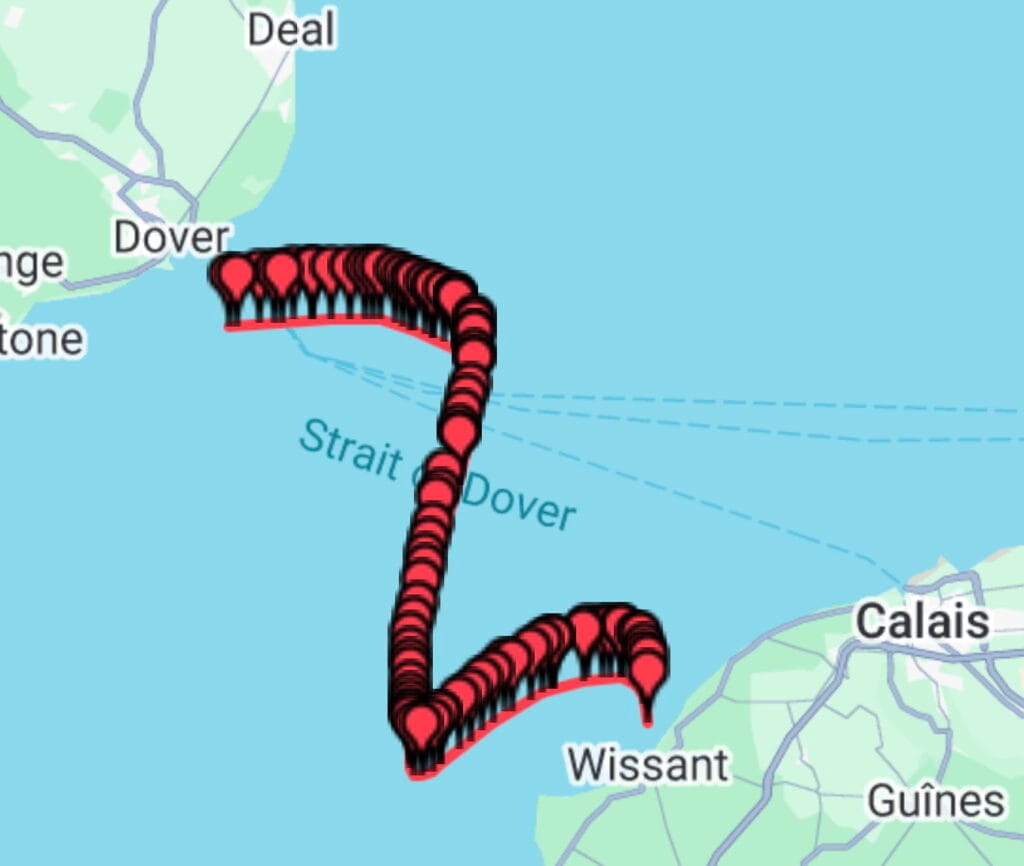
The CSA provides an interactive map for tracking progress and many people from around the world kept up to date with the team’s efforts. The Sea Leopard route took an ‘S’ shape due to the tidal conditions.

Katherine says: “Despite all the training, nothing can quite prepare you for the reality of the swim. It was really tough – and we only managed to keep going because of the camaraderie and mutual encouragement from the team, and all those supporting us from afar with their messages and donations.”

Sophia adds: “It was also very touch and go. The current along the French coast was very strong, in part because we were swimming on a spring rather than a neap tide, and we were really struggling to get into shore before the Calais Exclusion Zone, which is forbidden to swimmers. We all had to put everything into it at the point when we thought we had reached exhaustion.”

The route needs to take tides, currents and the wind into account

Teamwork certainly comes to the fore in a Channel swim, with family, friends and colleagues, the pilot and crew on board the escort boat and the CSA observer all helping ensure it is both possible and safe.

Not far now…
Made it!

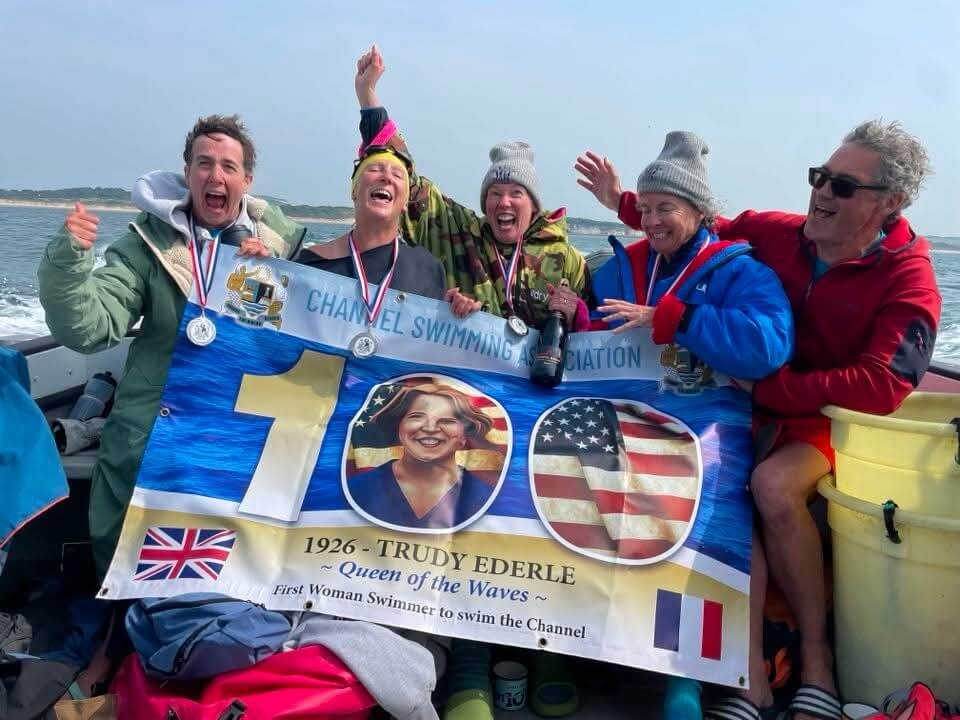
Les Reines du Rother made the crossing in 16 hours and 35 minutes. What an extraordinary feat. It is 100 years since the first woman swimmer to swim the Channel, Trudy Ederle, Queen of the Waves.

There is just still time to donate for these women whose concern for the health of our rivers and seas fuelled their courage and determination to raise awareness. You can find their just giving page here.

Celebration!

Andy Dinsdale and William Drew

Information

Is this the shape of things to come?

The recent container spills are the exceptions to the norm, as they have a point source, meaning they have a specific traceable source.

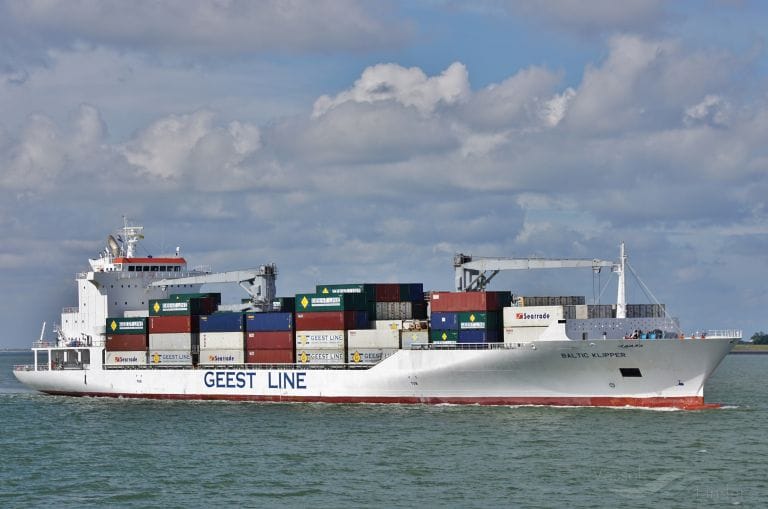
The Baltic Klipper is a refrigerated cargo ship built in 2010 and currently sailing under the flag of Liberia.(Image: Vessel Finder)

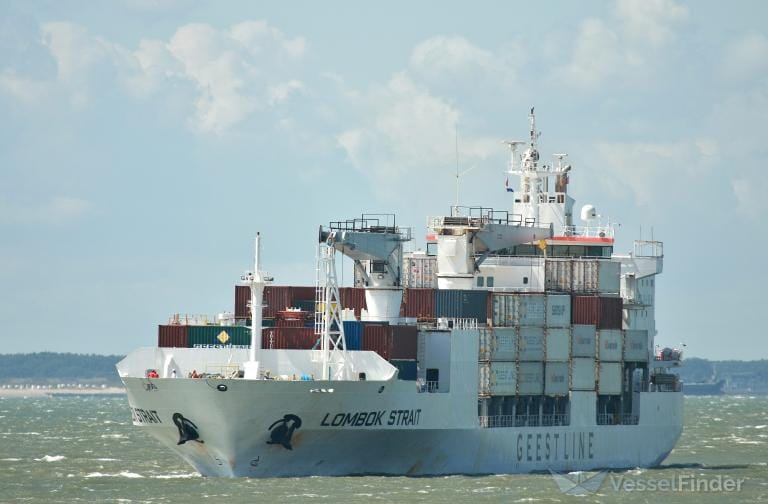
The 16 containers lost in December 2025 from the Baltic Klipper off the Isle of Wight that brought bananas to Selsey Beach, are an example.  This incident was followed by 17 containers lost from the Lombok Strait and 7 empty containers lost from the Condor Valparaiso during Storm Goretti in January, resulting in a variety of goods strewn across our beaches in Sussex, from onions and garlic to frozen chips, along with foam insulation from the containers themselves.

The Lombok Strait is a refrigerated cargo ship built in 2002 and currently sailing under the flag of Liberia (Image: Vessel Finder)

As long as humans have been seafarers, there have been accidents at sea where ships and cargo have been lost to the waves. Once upon a time the resulting flotsam would have been natural materials, for example coal, wool and grain. This changed with the industrial revolution and the development of global markets, leading to larger and faster ships to carry produce around the world. After WW2, the increasing production of plastic, government subsidies, and persistent marketing created a massive explosion in the demand for products from across the world.  

90% of all we own has been traded by sea and has spent time in a shipping container. Ships are still increasing in size; today some can carry 24,000 containers (holding the equivalent of around 1 billion cans of baked beans). Over 6,000 ships are in operation at any one time globally, carrying as many as 20 million containers between them.

In the twelve years up to 2020, an average of 1,382 containers fell overboard each year. The worst incident was the loss of all 4,293 containers from the MOL Comfort in the Indian Ocean in 2013. Most are lost through extreme weather, human error or structural failure.

There has been a recent (long-campaigned for) change in legislation. The International Maritime Organization introduced new regulations on 1st January; shipping companies must now report all containers lost at sea. Previously, they only had to do this if the contents were toxic or the lost containers were a hazard to shipping.

Chips on the beach at Eastbourne (Image: Sussex Express)

The immediate problem is the pollution from the containers and its removal to reduce the impact on the environment and local wildlife. There have been increased reports of stranded cetaceans, seals, fish and birds washed up on our beaches recently. The large quantities of chips and onions may decompose if they are left, but with what consequences for the ecosystem? The foam insulation will break up into smaller and smaller pieces. Who should bear the cost of cleaning up this pollution. Local communities and cash-strapped councils?

The shape of things to come may be more container spills through a greater fleet of larger ships working non-stop to cater for our needs, influenced by more frequent and more extreme weather events as our climate changes. We like all the things we buy. We’d probably also like to see our beaches less polluted. So what can we do? If we want to reduce plastic pollution, our most important objectives should be to buy local. If we can help to create greater local markets there will be less need to transport goods over large distances. Let’s support local producers and craftsmen, where good value food and commodities are produced (or repaired) locally. Who knows, this may even lead to happier, more connected communities

Challenges

Cuttlefish Summer Project

Common cuttlefish (Image:Wikimedia Commons)

What are cuttlefish?

Cuttlefish are related to squids and octopuses – a group of molluscs known as cephalopods. They have a well-developed head, large eyes and mouths with beak-like jaws. They have eight arms plus two feeding tentacles around the mouth and a fin that runs around their body. Cuttlefish are extremely variable in colour, but are usually blackish-brown, mottled or striped.

Common cuttlefish are the largest found in UK seas and are fierce predators . They make light work of crabs, fish and even small cuttlefish! They can live in water up to 200 metres deep but come to shallow waters to breed in spring. Their eggs are dyed black with cuttlefish ink, giving them the name ‘sea grapes’.

Common cuttlefish eggs (Image from one of our Wild Beach sessions)

Cuttlefish can quickly change colour and texture to merge into the background and escape detection. This ability is also used to distract predators or attract mates. During spring and summer, males engage in spectacular displays to attract females, passing pulses of colour rapidly along their bodies.

About the summer project for Nature Bureau

The common cuttlefish is the most important commercial species in the northeast Atlantic, and the English Channel population accounts for most of the species abundance. Before the year 2000, this population reproduced from February to July at 2 years old. After reproduction, all cuttlefish quickly die, so the entire life cycle is 2 years. In recent decades, because of climate change and ocean warming, a large proportion of the Channel cuttlefish population (10-30%) have begun to reproduce and die at just I year old.

After death, the body decomposes or is eaten by scavengers and the cuttlebone, which is lighter than water, floats up to be washed ashore, sometimes far away from spawning sites. These cuttlebones do not remain on the shore for long periods of time, as seabirds eat them searching for calcium. Therefore, when found, a cuttlebone is likely to belong to a 1 or 2 year old Channel spawner.
We can use the cuttlebones to age the cephalopods and determine whether they are reproducing (and therefore dying) at a younger age due to global warming.

Aims

  1. To estimate actual proportion of cuttlefish that halved their lifecycle due to climate change.
  2. To get an idea of seasonal changes in the relative abundance of 1 year old spawners.
  3. To provide in situ materials to verify the size – related natural mortality of cuttlefish for developing a 2-stage model.

Instructions

A common cuttlefish cuttlebone should measure 160-180 mm in length (Image: MarLIN)

Cuttlebones
1. Common cuttlefish (Sepia officinalis)
2. Pink cuttlefish (Sepia orbygniana)
3. Elegant cuttlefish (Sepia elegans)

  1. Find an intact cuttlebone on the shore.
  2. Be certain that it is the cuttlebone of a common cuttlefish (the photo above will help you decide). Aside for the common cuttlefish (Sepia officinalis), cuttlebones from the pink cuttlefish (Sepia orbygniana) and the elegant cuttlefish (Sepia elegans) may be found, but they are much smaller, rare and should be ignored for this study.
  3. Once you have located a common cuttlefish bone, pick it up and measure its length with a ruler, and record the measurement as well as where you found the cuttlebone (e.g. the name of the beach/town).
  4. Then take a clear photo of the underside of the cuttlebone (the flat bottom as opposed to the rounded top), making sure it is in bright light and that the entire cuttlebone is visible in the photograph. The photograph will then be used by Athena to determine the age of the cuttlefish at death.
  5. Break the cuttlebone in two so that it is not measured again by somebody else (Celas staff are also carrying out this work).
  6. Email the measurements and their corresponding pictures to Athena ([email protected]), making it clear which measurement applies to which picture.

Fun facts about cuttlefish

  • They can change colour in 200 milliseconds, as fast as a human can blink. 
  • They have W-shaped pupils which are thought to help control the intensity of light entering the eye.
  • They have three hearts, two of which pump blood to its gills, while the third circulates blood around the body
  • They have blue blood, thanks to the copper-rich protein it contains known as haemocyanin, which transports oxygen around the body. Our blood is red due to its iron-rich haemaglobin, which does the same job.
  • They have a doughnut-shaped brain, boasting the largest brain-to-body ratio of all invertebrates.
  • They can squirt clouds of ink to create a smokescreen and escape predators.
  • Cuttlefish might dream. Recently, researchers filming European cuttlefish in the lab observed short periods during their sleep-like states where individuals would erratically change colour and body pattern, and make irregular eye and arm movements. This strange behaviour, which was not repeated when awake or during inactive periods of sleep wasn’t triggered by any external stimuli and was very different from normal cuttlefish activity. 

From BBC Wildlife magazine

Challenges

Sea Shells

Image: BBC Wildlife

Seashells have many stories to tell us about the sea, what lives there and how everything is connected. Every day, as the tide ebbs and flows, new shells are washed up on the beach. Next time you pick up a shell, take a moment to think about who made it and the life it might have had. All shells were once part of a living, breathing sea creature. How are they formed? What animals use them? And what will happen to them as our oceans warm ?

What are seashells?

An empty seashell is a mollusc’s abandoned exoskeleton. Soft-bodied animals use them as their home and protection, their place to hide, and an attachment point for their muscles to help them move. There are many different shells to find, made by different kinds of molluscs, all around our coasts.

Limpet feeding tracks

Rocky shores are home to many sea snails such as limpets, dog whelks and periwinkles. Sea snails move by crawling along on a muscular foot. Limpets, like other gastropods have a toothed ribbon-like tongue called a radula, which they use to scrape away algae – leaving a zigzag pattern as they do so (see image above). As the tide goes out, limpets return to the exact same spot each time: their home scar. Their volcano-shaped shells are difficult to grasp, and they use their foot like a suction cup and glue themselves in place with specialised slime. These hardy creatures can withstand stormy seas and baking sun, and may live 20 years.

Sandy shores are home to many bivalves such as cockles and razor clams, each with a pair of roughly fan-shaped shells that clamp tightly together to keep their soft bodies safe inside. Sandy seabeds, with no hard surfaces for seaweeds to attach to, offer few hiding places, so many of these creatures live safely below the surface, extending a siphon (rather like a snorkel) to breathe and to feed (hastily withdrawn when danger is sensed).

How are seashells made?

Unlike crabs, lobsters and other crustaceans, which routinely shed their shells and grow new, bigger ones, molluscs keep their shells all their lives and make them bigger each season as they grow. If you look closely at the innermost whorl of a sea snail you may be able to see the tiny shell it had when it first hatched from an egg.

How to make a sea shell – just add water (Video: Minute Earth)

As it grows, a mollusc uses its soft body tissue, called the mantle, to lay down another layer of shell. Shells are mainly made of calcium carbonate. You can watch a short video here.

Like tree rings, seashells have seasonal growth lines that are sometimes visible from the outside. Counting the most prominent lines across a bivalve shell can give you an idea of how old it was when it died.

Many marine molluscs live for several years, and some for much longer. Ocean quahogs from the North Atlantic can live for centuries. One individual, nicknamed Hafrún, meaning ‘mystery of the ocean’ in Icelandic, lived for 507 years, making it one of the longest-lived animals to have its age accurately measured.

Scientists use seashells, especially long-lived ones, as climate archives that hold detailed information about the changing ocean. Shells can tell the past temperature and acidity of seawater the molluscs grew in; they can even indicate when volcanoes erupted or hurricanes struck.

Why do seashells have different shapes?

Shells seem to come in an endless variety of shapes, but they are generally versions of a spiral. That’s obvious in sea snails and less so in clams and other bivalves but their shells are spirals too, just ones that flare wide open. The precise shape of their shells are due to their different habitats and ways of living and moving.

Molluscs may also increase their defences by adding corrugations and spines to their shells, making them difficult for predators to handle. Spiny oysters in the Mediterranean are covered in prongs that encourage seaweeds and sponges to settle and grow, giving them camouflage on rocky reefs.

Marine bivalve and gastropod shells from Shell Island, N. Wales
(Image: Wikimedia Commons)

How do seashells get their colours and patterns?

Lots of molluscs add a shiny layer of mother-of-pearl, or nacre, to the insides of their shells. This is designed not for beauty, but for strength, as its structure helps to make shells crack-proof. Other molluscs secrete pigments in their shells that help hide them in their habitat. Flat periwinkles have rounded shells that resemble the green and brown gas chambers of the bladderwrack seaweeds they inhabit along rocky shores. Janthina snails float below the sea surface, suspended from a raft of air bubbles and their shells are deep violet-blue, camouflaging them in open water.

Scientists have not yet worked out exactly why molluscs evolved their shell patterning. One idea is that they use their patterns as a marker to guide them as they lay down more shell material. Shell-making is not a continuous process, so a mollusc needs to remind itself where the previous growing season left off, so it can align its mantle and grow in the right places, or it could end up with a wonky shell!

Hermit crab (Image: National Geographic)

Who else uses shells?

We are not the only shell-collecting animals. Hermit crabs have lost the ability to make their own shells and must instead borrow empty ones. When the time comes for them to find a bigger shell, they organise themselves into orderly queues, with the smallest individual at one end and the largest at the other. Two big crabs may tussle over the biggest, best shell. Once their contest is decided and the victor claims the prize, all the other smaller crabs move into the vacated shell of the crab next in line.

Down in the deep sea, carrier shells (Zenophoridae) pick up empty seashells, pebbles and coral fragments, gluing them onto the outside of their shells as extra defence from predators.

And the most intelligent molluscs of all, the octopus, has learned how to use seashells as tools. Like hermit crabs, octopuses’ ancestors gave up the ability to make shells long ago. But they have been observed using a pair of matching clam shells to make into a shelter if they feel threatened.

Based on an article by Helen Scales on BBC Discover Wildlife.

How will shellfish be affected by climate change?

Every year, the ocean is estimated to absorb more carbon dioxide  (CO2) as than all the world’s forests do. That may seem like a good thing for humanity – the more the ocean can absorb, the less CO2 remains in the atmosphere to drive the greenhouse effect that’s behind climate change.

But scientists are concerned about all the CO2 the ocean absorbs. Absorbing CO2 makes the ocean more acidic – this is known as “ocean acidification” – and this makes it difficult for crabs, clams, and other shellfish to grow their shells as strong as they need to be, and they can die as a result of ocean acidity.

Our sea shell challenge:
can anyone beat Andy’s record of four wentletraps?

Wentletrap found locally

What are wentletraps?

Wentletraps are marine snails with unique shells that form a high, conical spiral and have deep sculptured ribbing. They sometimes have a porcelain-like appearance. Most are white and no more than 5 cm long. Their name in Dutch means spiral staircase.

Wentletraps are widely distributed, from the tropics to the Arctic and Antarctica. They prefer sandy or muddy sediments and are often found near anemones or coral, from which they get their nourishment. The common wentletrap (Epitonium clathrus) is found in European waters.

Precious wentletrap (Image: Wikimedia Commons)

The precious wentletrap (Epitonium scalare) was a rare and desirable specimen, which exchanged hands for large sums of money in the 18th century. As they became more common, they were still valued for their beauty.

Further reading

There are many books about shells and the seashore, but here are a few enjoyed by Strandliners.

Shells:
Spirals in Time, The Secret Life and Curious Afterlife of Shells by Helen Scales
Shell Life on the Seashore by Philip Street

Shell ID Guide:
Wild ID Common Seashells of Britain and Ireland, Field Studies Council

Beachcombing:
The Essential Guide to Beachcombing and the Strandline by Steve Trewhella and Julie Hatcher


Information

Up in smoke – what happens to your black bin waste

Looking into the furnace

Graham Ellis of Rye Sustainable Living Forum organised a trip to the Newhaven Energy Recovery Facility, which takes all our non-recycled domestic waste. The facility is in effect a large incinerator which uses the heat from burning up to 210,000 tonnes of waste per year, to generate electricity for the National Grid to power about 25,000 homes. 

Model of the facility

The facility was seen as controversial prior to its construction in 2008.  The Rother Environmental Group was concerned that the facility would necessitate a constant flow of waste over its lifetime, at the expense of recycling programmes. In the event, there has never been a shortage of waste to burn since its completion in 2011 and doesn’t in itself prevent increased recycling. The Veolia contract runs until 2033 and the lifespan of the facility is a maximum of 50 years.

One of the most reassuring things to report is that at no time has the facility been used to burn waste collected for recycling. None of what you put into your recycling bin will be burnt, other than what is rejected in the Materials Reclamation Facilities (see previous article).

About 58% of all the waste we produce is turned into energy in Newhaven, with 41% being recycled or reused and just 1% going to landfill. In practice, these figures have barely changed in the last 10 years. Sadly, there appears to be a ceiling to recycling.

The facility manager, Martin Micallef, together with Steph of Veolia South Downs Ltd, took us on a tour of the facility that employs 36 staff. It’s a neat design, certainly compared to the rather ramshackle recycling and storage depots along the access road. The whole site is surrounded by a bund, to 5m above sea level, and is part of the Newhaven flood protection. All the rainwater is stored on site and used for quenching the ash.

The tipping hall

The waste arrives for the most part in large 23 tonne capacity articulated trucks from waste transfer stations across the county. The tipping hall can take up to eight of these at a time, although in practice there are always fewer. Some waste also arrives in street cages and trucks. Each day it’s about 650 tonnes that is delivered. Most of that is from homes in East Sussex, although there are some commercial companies using the facility too. When we were there, a truck from Gatwick airport was emptying its load. 

The whole facility operates at negative air pressure, to ensure no dust or contaminants escape. 160,000 m3 of air is drawn in per hour, and a megadoor is fitted to the reception hall to minimise the escape of air.

Surprisingly, part of the facility is below ground, to a depth of 20m. That allows for a large bunker to fill with waste, with a 4000 tonne capacity, creating a buffer that can allow for outages as well as peaks and troughs in waste supply. Unsurprisingly, there is more waste after Christmas, with a low period in March. Every three months, the waste is surveyed to find out what changes are occurring in the waste streams. 

Two relatively new waste streams are a concern

Disposable E-cigarettes, or vapes, can burst into flames at any time prior to arrival at the facility. They have caused a significant rise in fires at waste transfer sites and recycling plants around the UK, releasing toxic fumes into the environment in the process. Well over a million disposable vapes are thrown away each week in the UK, with many of them find their way into general waste. When broken, their lithium-ion batteries can easily catch fire. AVD (a pioneering fire extinguishing agent) fire extinguishers can be used to put out these fires.

The other risk is explosions of gas bottles and canisters, in particular resulting from the rise in the use of nitrous oxide, popularly referred to as laughing gas, as a recreational drug. Veolia UK experienced more than 25 serious incidents of explosions and damages at energy recovery facilities last year due to discarded canisters, costing the company £1.4 million from outages and repairs. 

Thankfully the boilers are very tough – 120 bar pressure tested – so most explosions do not close down the facility, they just pause the process before the gases can stabilise.

Other than removing some gas bottles, the waste is not sorted before it is poured into the holding pit. A manually operated claw is used to mix the waste to allow an even burn. 

The claw

The process

Waste is fed into a chute with a ram feeder into the furnace where it combusts. It is combined with pre heated oxygen to produce ‘syngas’, to allow for a full combustion. Ammonia is injected at this point as this helps break down the NOx gases (nitric oxide and nitrogen dioxide). The heat at one point exceeds 850 degrees, to allow for a full breakdown of all materials. High risk medical waste is not treated here, as the temperatures need to be even higher, so need sending to a specialised incinerator. 

The hot gases from the furnace travel through a boiler, heating water that runs through pipes to create steam. The steam spins a turbine to generate electricity, of which 16MW/hr is then exported to the grid.  2MW/hr is used on site for running the fans and all the other electrical equipment of the facility. 

Incinerator bottom ash (IBA) is the noncombustible residue left over after waste is burned in an incinerator. It’s a complex mixture of irregularly shaped particles that can include metals, rubble, concrete, minerals, ceramics, and glass. IBA can also contain heavy metals, organic compounds, and other toxic contaminants. This is treated to remove contaminants and reused as an aggregate in construction.

On the tour

Control of pollutants and safety

The exhaust combustion gas is highly acidic, so 3 tonnes of lime is added during the process to neutralise these gases, help remove sulphur dioxide and other contaminants. There is a whirlwind within the reactor that binds the acids to the lime. These are then removed as a solid ash known as Air Pollution Control Residues (APCr). These are hazardous and have a high pH, heavy metal content and persistent organic pollutants such as dioxins. At Newhaven, these are containerised in bespoke bags – Martin calls them Gucci bags because they are so expensive – to then have them transported by train to have them securely stored at Minosus – Veolia’s underground storage facility at a salt mine in Cheshire. Newhaven ERF generates about 6000 tonnes of this difficult waste per year. 

Processes are also in place to remove ferrous metals from the ash pit, as well as aluminium.

The emissions to air of the facility through its twin stacks are very tightly controlled. Until last year 10mg/m3 of air dust particles were permitted, this reduced to 5mg/m3 last year. The actual emissions from this facility are 1mg/m3, five times lower than the permitted maximum.

Alongside the reactor tower

The steam at the end of the process amounts to 80 tonnes per hour, where it is cooled to condense back into liquid water.

The facility runs at 100% capacity all the time, with planned outages every 2 years, at which time all the hotels in Newhaven get booked up to accommodate all the contractors carrying out maintenance. 

It was reassuring to see how thoroughly the automated process is monitored, with the gas being analysed instantly at every point in the process and banks of screens. 

The control room

One aspect of the visit that made for it being a bit stranger than necessary was a testing of the public address system which went on for an hour ‘Attention please, attention please…’. It was just bad luck that this once a month test was happening during our visit.

A frustration for me was seeing just how much waste is being incinerated that has the potential to be recycled, if only we the consumers could make the effort to separate it out better when we can.

On the tour

By Dominic Manning
Article featured in Rye News 2nd August 2024

Challenges

Sea Glass

Image: Seapig

Sea glass is naturally weathered glass, having the appearance of tumbled stones, with smooth edges and a frosted appearance. It is also known as drift glass, from the process of longshore drift that wears it. It may take 20-40 years, sometimes as much as 100-200 years, to take on its characteristic appearance.

Where does it come from?

Sea glass starts off just like any other shard of glass; broken, jagged and sharp. The travels of any one piece of sea glass have been long and tumultuous since it entered the sea, tumbled by the ocean and scoured by sands and stones. How any one piece got to the beach is a mystery, but there are some common routes by which many pieces wash up on your beach. The most common are as flotsam from shipwrecks and jetsam from sailing vessels. In some countries, where there is no waste infrastructure, general rubbish may discarded into rivers or the sea. You might even find a piece of a message in a bottle that didn’t make it in one piece.

Many years ago glass factories dumped their glass waste into the sea. An example of this is Seaham, a harbour town on the Durham Heritage Coast. Seaham is world-famous for its abundance of unique sea glass, making it a ‘must-see’ site for collectors. Seaham and nearby Sunderland were home to many bottleworks and glass-making factories during the Victorian and Edwardian eras, and Seaham boasted the largest glass bottle works in Britain – The Londonderry Bottleworks, operating from the 1850s to 1921. 

The bottleworks produced up to 20,000 hand-blown bottles every day, in different colours and designs including hand crafted bottles, perfume bottles and household glass, all of which were distributed across the globe. 

Londonderry Bottleworks (Image: East Durham Now and Then)
Seaham sea glass – no two pieces are the same. Treasures include codd marbles, used as a seal for fizzy drinks, safety glass with wire reinforcement running through it, bottle necks and sea pottery! 

What about colour?

Sea glass has comes in many colours, depending on the type of glass it was made from. Different shades are determined by the chemicals used in making the glass, the temperate of the melt and the length of time it was melted for. Each colour tells us a little about a nugget’s past. Colour rarity varies from country to country, but globally white is the most common and orange the rarest. The most common colours in the UK include white and green.

White sea glass, from colourless bottles, could have been an old milk bottle, a vase or jug, or even an old car windscreen.

Sea glass comes in many shades of green. Very dark green, almost black in colour, may have come from bottles holding alcohol. The original Coca-Cola bottles came in pale green. Some olive oil brands still use iolive-coloured glass, just as it they many years ago. Bright emerald green was sometimes used for medicine or mineral bottles , and various shades of green were used for fishing buoys. if you find a mermaid’s nipple it has come from a fishing buoy (no mermaids were harmed in the making of these).

Some of the rarest & most treasured sea glass finds, nipples & pikos (navels) are the inside nubbins or outside blob seals from glass fishing floats (Image: Dr Beachcomb TM)

An increasingly rare green sea glass is uranium glass. This had uranium (usually in the form of one of its oxides) added to the mix before melting. The amount of uranium varied from a trace to around 2% (some early pieces may have had higher levels). Uranium was added to decorative tableware and ornaments for its fluorescent effect under UV light. The production of uranium glass dropped dramatically from the 1940s, when supplies of uranium were diverted towards the manufacture of nuclear weapons or nuclear power. The yellowish green uranium glass was sometimes called Vaseline glass, due to its perceived resemblance to the colour of petroleum jelly.

Uranium glass, in daylight and under UV light (Image: Aritra Roy)

Cobalt glass includes a cobalt oxide or carbonate compound in the mix to produce the typical rich blue colour. Cobalt glass was traditionally used for apothecary poison bottles. Other uses include glasses for professional olive oil tasters to hide the colour of the oil, and for flame testing in chemistry labs. Bristol blue glass is popular with collectors – used for Harvey’s Bristol Cream sherry and Tŷ Nant mineral water.

Black sea glass, hard to distinguish from the shingle, isn’t actually black; if you hold it up to the light, you will see shades of either brown or green. Hundreds of years ago, very dark, thick glass was needed to keep the sunlight from spoiling alcohol such as rum, gin and beer.

Rarer colours like red, orange and yellow are highly sought after by collectors (see rarity chart below). Red may have been used for maritime lights or fancy tableware. Bright orange sea glass is very rare. It may have come from old lanterns, carnival glass or the taillights of old motor vehicles. Sea glass can also be found in pink and lavender. These are also rare colours now, but once were cheap and cheerful tableware.

Sea glass rarity chart from the US reading from L to R, top to bottom (Image: West Coast Sea Glass)

What about size?

Just like pebbles, sea glass pieces carried along the coastline and are subjected to sorting. This is where the ocean’s currents and tides sort the pebbles by size and shape, depositing them on the beach in a specific order. The process of winnowing is the natural removal of fine material from coarser material (larger pieces) by wind or flowing water. Once a sediment – including pieces of sea glass – has been deposited, subsequent changes in the speed or direction of wind or water flowing over it can agitate the grains and allow removal of the finer pieces.

I am obviously looking in the wrong place, as I only ever find the tiniest pieces of sea glass. Well done to our keen observers who have been sharing their sea glass finds on Rye Bay Beachcombing recently.

Challenges

Big Seaweed Search/Sussex Kelp

Image: Big Seaweed Search

Big Seaweed Search

This is a great half-term activity for the children, or indeed for anyone at any time. The Big Seaweed Search is a partnership between The Natural History Museum and the Marine Conservation Society.

Why are seaweeds important?

The UK is globally important for seaweeds, being home to more than 650 species. Seaweeds create underwater habitats that provide food and shelter for thousands of marine organisms. They support commercial fisheries (providing nursery grounds for juvenile fish; they absorb carbon dioxide from the atmosphere; they are used in foods, cosmetics and medicines; and they protect our coastlines from storm damage.

Strandliners volunteers at a Big Seaweed Search in Eastbourne

What am I looking for?

By exploring the seashore and recording the living seaweeds you find, you are helping to monitor the effects of environmental change on Britain’s sea life. You are taking part in a real citizen science programme which focuses on three key environmental changes: sea temperature rise, ocean acidification and the spread of non-native species.

Image: Dive magazine

What do I have to do?

The instructions can be found on the Big Seaweed Search website, but are basically as follows:

  1. Start around an hour before low tide.
  2. Select a 5-metre width from the top of the shore to the sea.
  3. Walking away from the sea, explore the whole plot for about an hour, recording only living seaweeds attached to rocks or another hard surface. You only need to record the species from the guide. It is important that photographs are taken as evidence. Photographs are essential for the BSS to be able to use your results.
  4. Upload your results and photographs, using the online form or the app.

Remember to stay safe on the beach. Tell someone where you are, take a mobile phone, wear sensible clothing and footwear (rocks are slippery and may be encrusted with barnacles), don’t go out in bad weather, and wash your hands afterwards.

You can find the Big Seaweed Search guide here
and the Big Seaweed Search recording sheet here.

Meet seaweed researcher Juliet Brodie and Big Seaweed Search participant Jazz in this short video and learn more about why seaweeds are important and how to take part (3:46 mins).

Sussex Kelp Recording Project

What is kelp?

Kelp are large brown seaweeds found along rocky shores. Like marine trees, kelp create a ‘canopy’ beneath which many species takes shelter and find food.

Why is kelp important?

The organisms that shelter and feed here include commercial fish and crustaceans, so kelp supports local livelihoods as well as providing other benefits for nature, people and the planet. Kelp locks away carbon, filters the water and protects our coast from storms by dissipating wave energy.

Vast kelp beds along the Sussex coast (mostly towards the west of the county) once supported a wondrous diversity of marine life. But by the late 1980s, 96% of Sussex kelp had disappeared. This project aims to bring it back.

The journey to kelp recovery started with the Sussex Nearshore Trawling Byelaw. This pioneering legislation created one of the largest trawling prohibited areas in the UK in March 2021. At the same time, the Sussex Kelp Recovery Project was formed to champion, study and facilitate the return of kelp through through progressive, coherent and collaborative action. Find out more here.

There are more videos on the website, but this one, narrated by David Attenborough, launched the project.

You can be part of SKRP’s research programme

Citizen science is a growing discipline that enables us to participate and collaborate in real scientific research and increase scientific knowledge.  We can get involved to help deliver SKRP aims.

Everyone can contribute to restoration efforts via a handy app from the Sussex Wildlife Trust. Whether you’re an occasional beach walker or an avid scuba diver, you can record any kelp you’ve seen on the beach or out to sea, and play your part in the Sussex Kelp Recovery Project. You can register here and find out more about this citizen science project.

Challenges

Hagstones

A hagstone is a stone with a naturally formed hole. Traditionally, hagstones are flint, the most abundant pebbles on our beaches in South-East England, typically grey or brown in colour and worn smooth and rounded by the action of the sea.

Hagstones on a Sussex beach

What is flint?

Flint is a microcrystalline sedimentary rock composed of silica, formed from the remains of sea sponges and planktonic organisms such as diatoms and radiolarians during the late cretaceous period (60-95 million years ago). Flint was formed in sediments that later became chalk, and so it is found in areas with chalk bedrock, such as the South Downs. As the chalk cliffs erode, the flint is exposed and deposited on the beach.

Flint deposits in chalk – they can often be seen in horizontal bands (Image: The Coastal Path)

How do holes form?

To be considered a hagstone, the hole should have been made naturally. Holes are often made by the wearing away of softer inclusions, for example a fossil sponge embedded in the silica. Sometimes minerals are deposited in small pockets within a rock as it forms. Later these small deposits may weather and erode more quickly than the surrounding rock. The hole may be very small to be begin with, even just a dent, but can be made larger by the action of smaller stones grinding against them through wave action

Hagstone in the making – with fossilised remains

Softer rocks such as limestone or sandstone may have holes made by the activities of marine animals such as burrowing bivalves, marine worms or sponges. These might not have been thought of as hagstones.

Hagstones in folklore

Stones with natural holes play a large role in European folklore. They are are also known as witch stones, adder stones, druid stones, fairy stones or dobbie stones. They were believed to have magical properties, protecting the bearer from witches and ne’er-do-wells.

One belief was that only good luck can pass through the hole, whereas bad luck and curses became ‘stuck’. It was also commonly thought that magic could not work on objects that water can pass through. As the stone’s shape resembles an eye, it acted as a talisman to ward off ‘the evil eye’ (a prominent tradition in Eastern Mediterranean and Western Asian culture). The hole in a hagstone was even thought be a portal to the faerie world and could bring good luck to anyone able to make contact.

Traditionally, hagstones were placed on windowsills or above doors to bring good luck or to ward off evil. They were hung with a red ribbon above the bed or nailed to the bedpost to protect against nightmares. Across Britain, they were hung above stables, sometimes tied to a piece of iron (which also repels witches) to stop witches riding the horses during the night or above cattle sheds, to stop witches turning the milk sour.

In Dorset, fishermen used a hagstone as a protective amulet, threaded onto the rope used to haul the boat up the beach: the boat was thought to be witched if it did not bring in a good haul. In sailing ships, hagstones tied to the mast or a line of stones tied together with string and nailed to the hull were used as protective talismans to ward off witches or to attract good sailing conditions at sea. This tradition was particularly prominent in the South-West. In Sussex there are records of stones with holes used by a midwife to cure children’s diseases and prevent adults catching them. Other uses included tying one to your keys to stop them getting lost, and worn as a pendant for personal protection.

Hagstones were often thought to have been formed by adders: traditionally, on the evening before May 1st, there was a gathering of snakes, which curled together in a ball with a hole in the middle, leaving their hardened saliva behind. In The Mabinogion (the earliest Welsh prose stories) such a stone helps Peredur to escape a lake monster and Owain to escape a castle by becoming invisible. Another theory is that the hole is caused by the bite of an adder: giving rise to the notion that the stones could protect against snake bites.

Local stories

You can check out any time you like, but you can never leave… (Image: Hastings in Focus)

Hastings is supposedly under an enchantment known as Crowley’s Curse, put on the town by author and ceremonial magician, Aleister Crowley. It is said that anyone who has lived in Hastings is compelled to return, no matter how far away they move or for how long. The curse can only be broken by taking a hagstone from Hastings beach!

There is an interesting article in the journal Elementum, entitled In the Eye of the Hagstone, Under the Spell of Flint on the Sussex Coast, by Alex Woodcock. You can read it here.

Whatever you believe, perhaps there is still magic in a mindful walk along the beach, whether we are removing plastic pollution from the environment, looking out for special treasures, or just enjoying the sea air.     

We must add a disclaimer here: under the Coastal Protection Act 1949, the removal of any natural material, such as sand and pebbles from beaches in the UK is illegal.

Challenges

Mermaid Purses

Some sharks, and all true skates, reproduce by laying eggs. These are surrounded by a tough leathery capsule (made of keratin) that protects the embryo as it develops. After several months these are ready to hatch, and a fully-formed shark or skate will emerge. 

Once empty, the egg cases (or mermaid’s purses) often wash up on the beach. The best places to find them is among the strandline, where the seaweed washes up. By looking at the size, shape and features of the egg cases you find, you can tell identify the species.

The Great Eggcase Hunt began in Devon twenty years ago. It now asks us to become citizen scientists by looking for egg cases and recording our finds. These can indicate species presence and diversity.

Preparing your egg cases

The egg cases washed up on the strandline are often dried out. Rehydrating them makes them much easier to identify, as they expand to their true size.

Fill a container with freshwater and submerge the egg cases. leave to soak for several hours, especially if they are large or very dry. Remove from the water and compare to the ID chart. Don’t forget to take measurements – and photographs – then you can upload the results to the Great Eggcase Hunt website.

Identification

You can find the ID guide here.

You can find the ID key here.

You can also download the Shark Trust App and use this to identify and record the egg cases you find, straight from your phone. If you prefer, you can upload your results through the recording hub. You can see the findings on an interactive map.

The 2023 Great Eggcase results can be found here.

There are lots of ways you can help the Shark Trust by becoming a citizen scientist. You can find out more here.

Spotlight on Undulate Rays

Easily identified by its beautiful pattern, as seen in the video, the Undulate Ray gets its name from the wavy patterns of lines and spots on its dorsal side. Despite being called a ray, it is actually a skate. One difference is the tail – a skate’s tail tends to be stockier, whereas a ray’s is more slender and whip-like (some rays have a stinging spine on the tail). Another difference is that skates generally lay eggs in capsules, whereas rays retain the eggs inside their bodies and give birth to live young.

The Undulate Ray normally lives on soft sandy or muddy sea beds, where their markings help to camouflage them against the sea floor – they often bury themselves just below the surface. They can live for over 20 years and grow up to 90 cm total long. Depending on the size of the individual, their diet can range from small fish to shrimps and crabs.

The Undulate Ray is an endangered species globally according to the IUCN Red List and is a priority protected species in the UK. The threats they face include overfishing and habitat loss. We are lucky here in Sussex to have a thriving population of Undulate Rays, perhaps due to the Marine Conservation Zones we have here, which are allowing the natural restoration of our inshore waters.

Undulate Ray egg case (Image: Sussex Wildlife Trust)