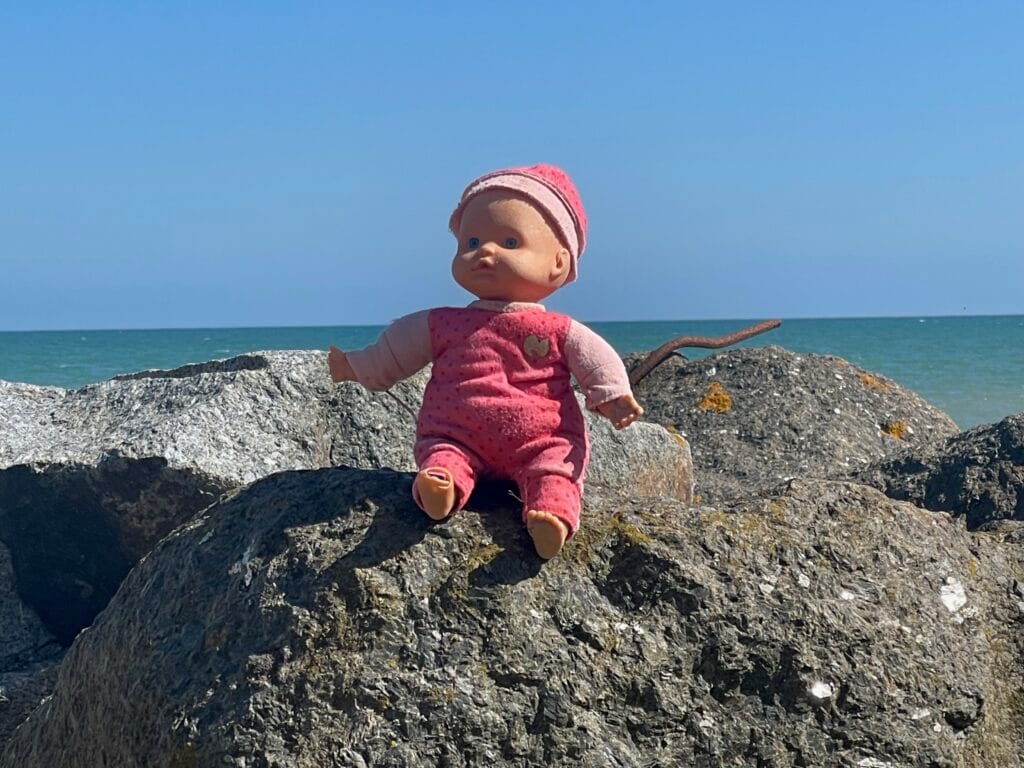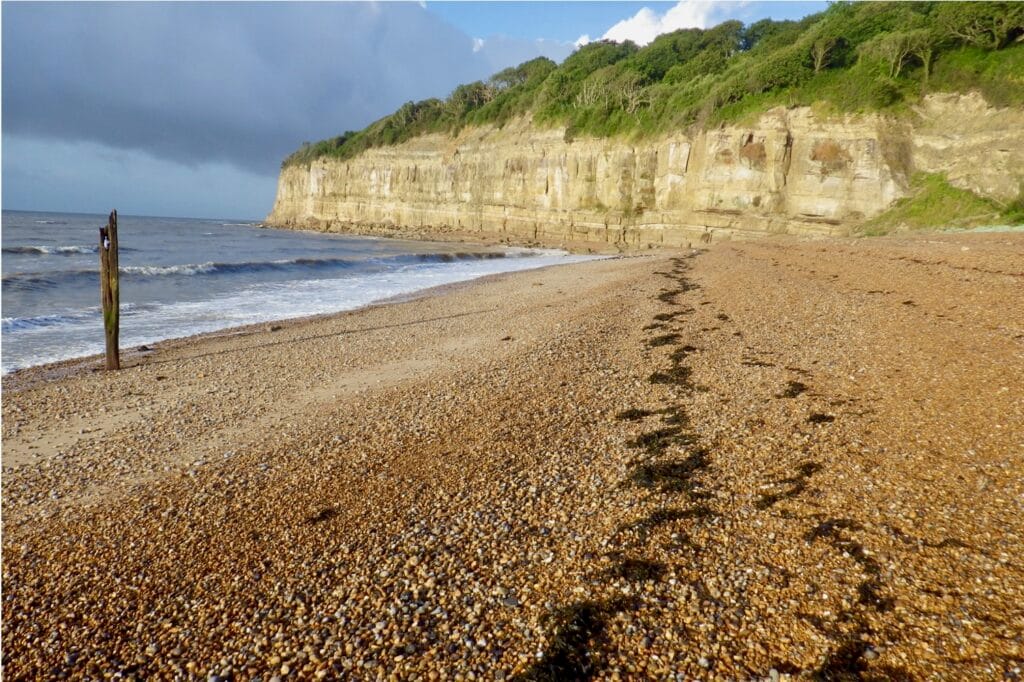
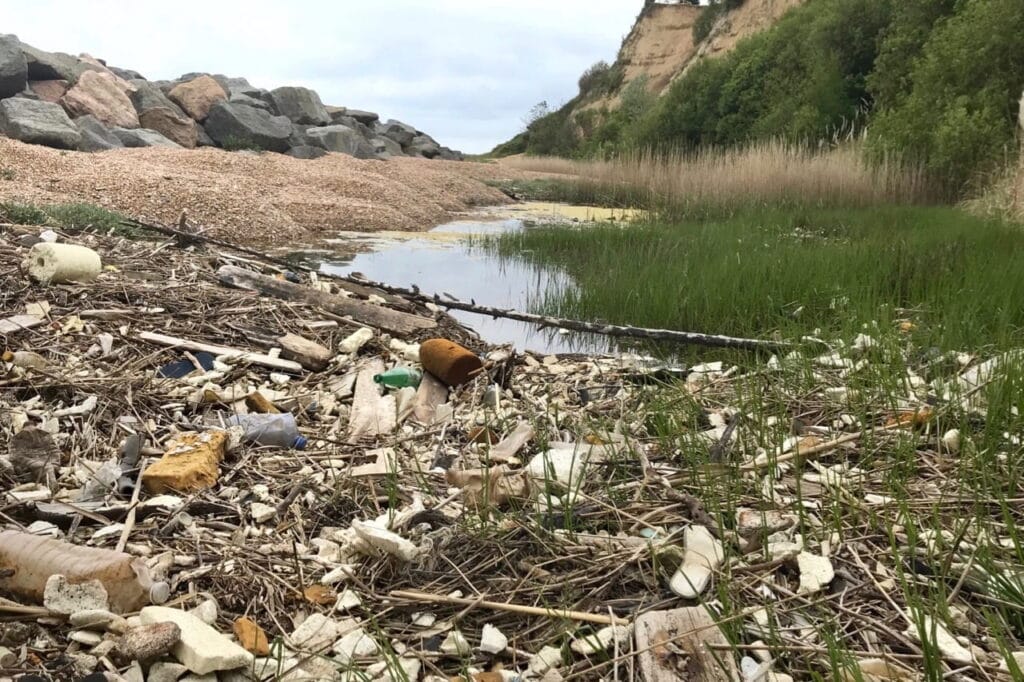
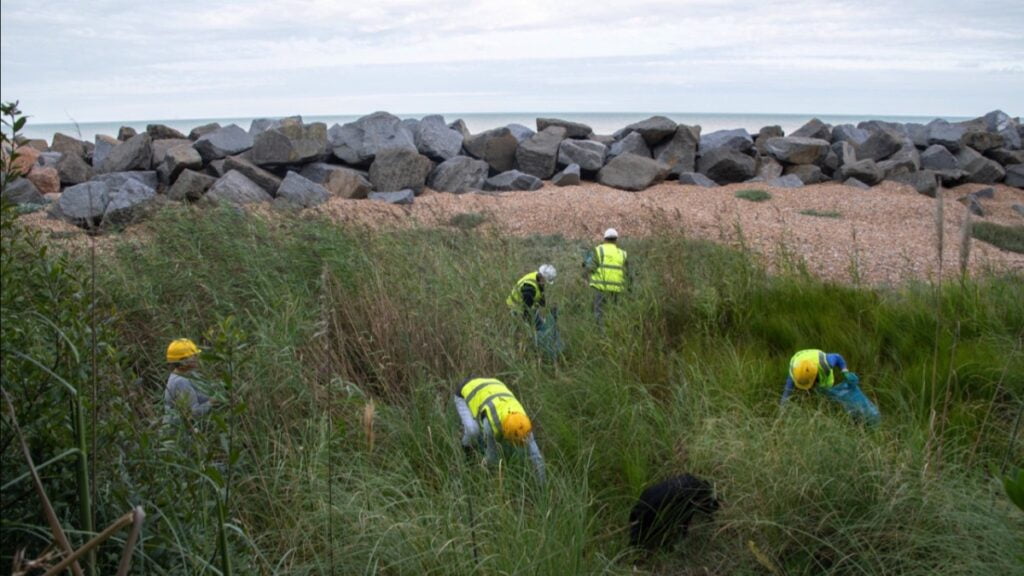
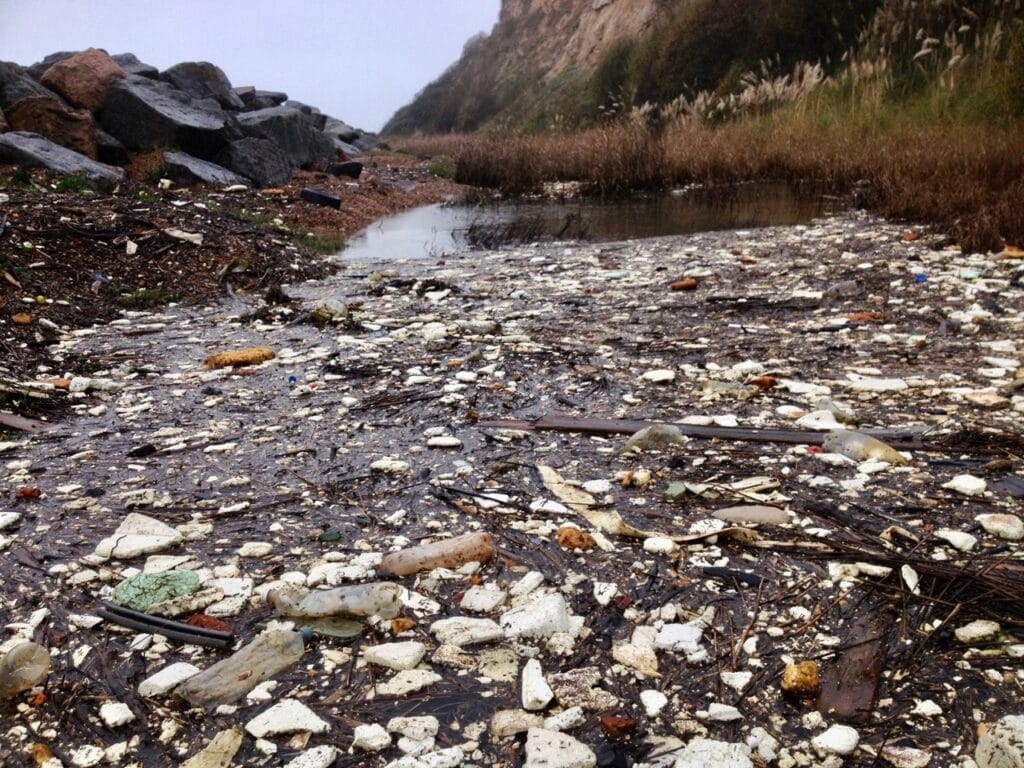
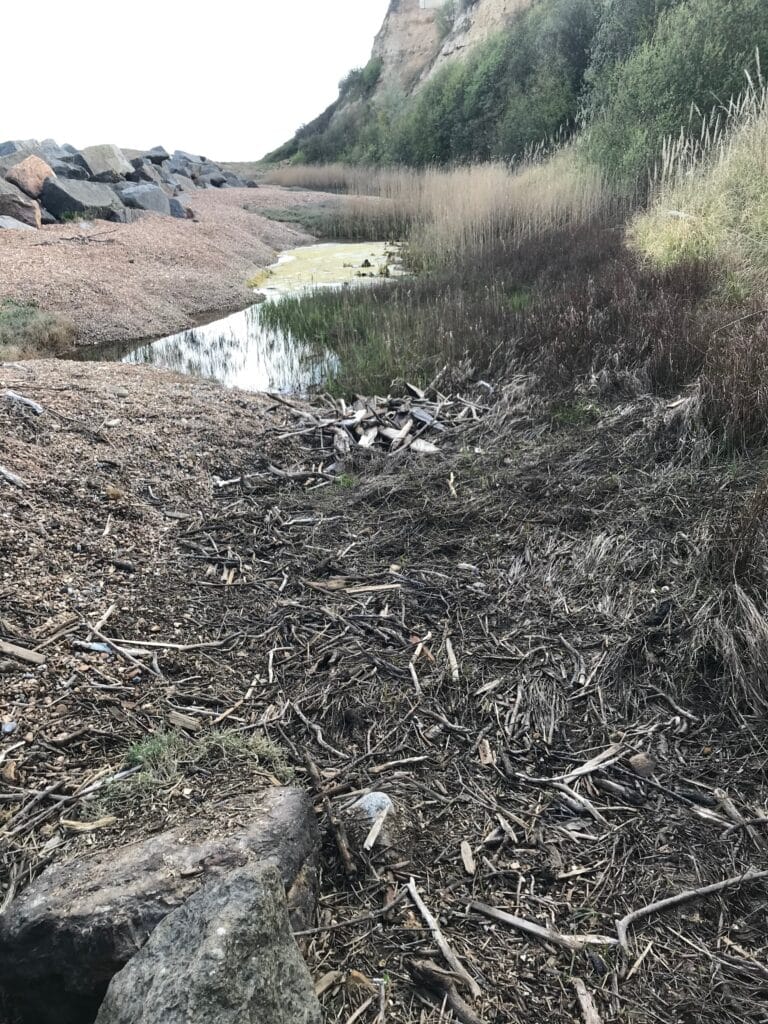
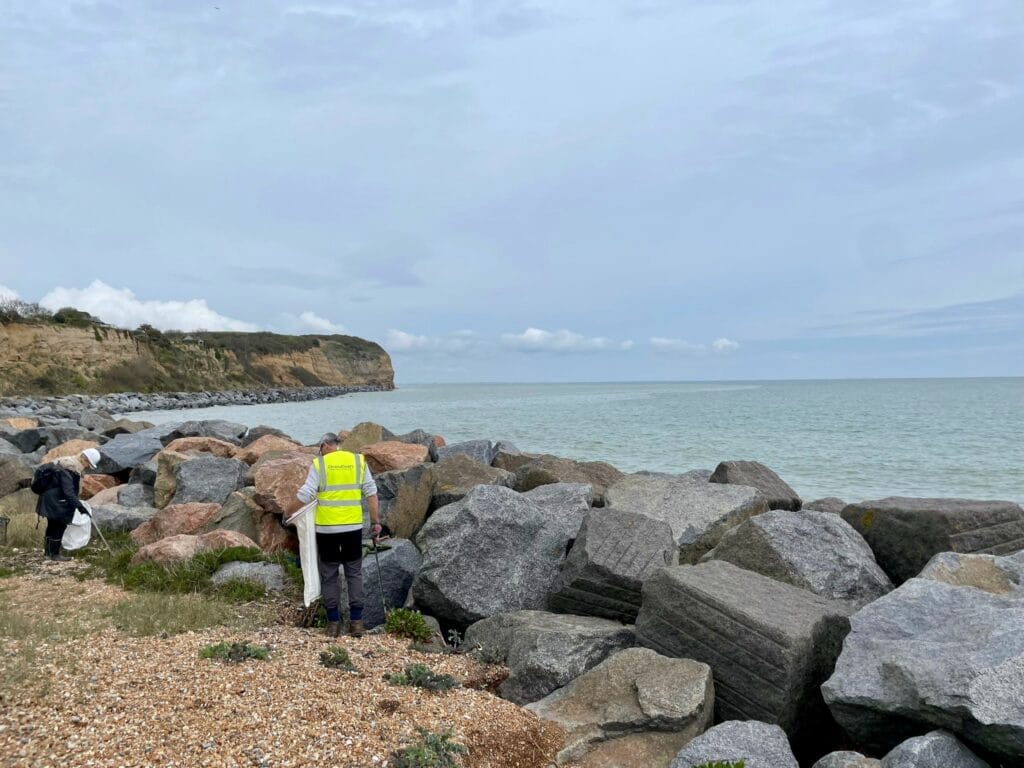
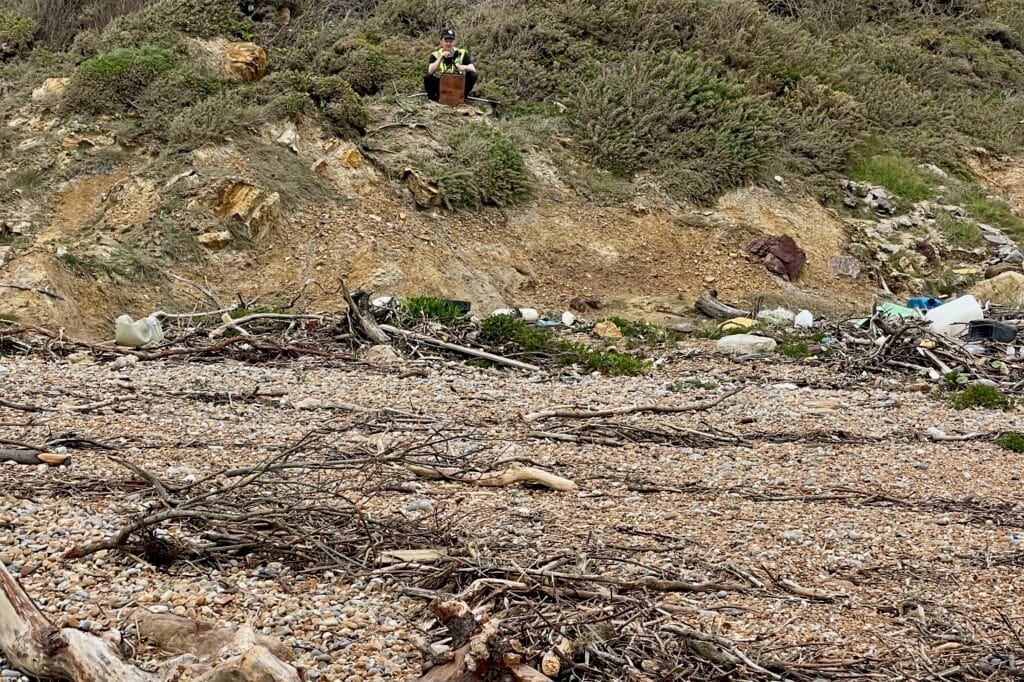
Strandliners has been working for several years with the amazing team at the Pett Level Independent Rescue Boat to clear behind the berm. The berm was constructed to protect the cliffs which had been eroding and crumbling into the sea. It helps by disspating wave energy as well as being a physical barrier, but sadly, a lagoon of rubbish has been building up behind the berm. Where does it all come from?
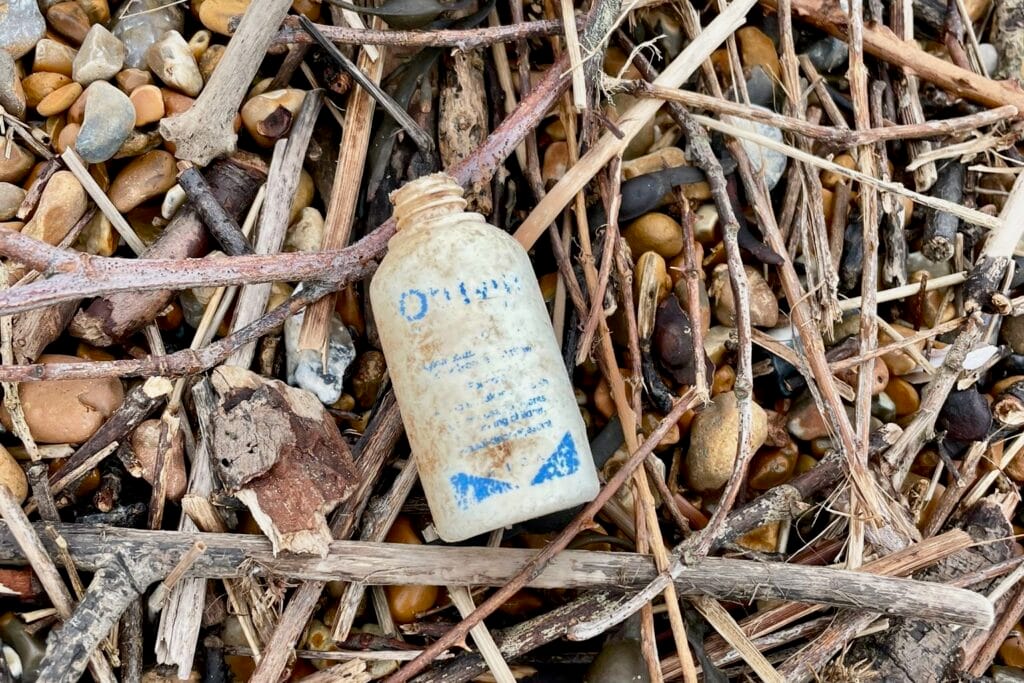
The sea might have deposited it there, but much of it has come from land-based activities. All of it has come from human activities! So what is there? Plastic single-use items – bottles; remains of fishing equipment – net, rope, traps; sewage-related items – tampon applicators, cotton bud sticks that have been flushed; and polystyrene pieces in their millions from packaging, fishing boxes etc. One positive outcome is that it has been taken out of the sea and won’t be endangering marine animals. But what of the strandline animals living where the land meets the sea?
All clean-ups are short term unless there is some attempt to collect information on what the pollution is in the first place. Only then can long term change happen.
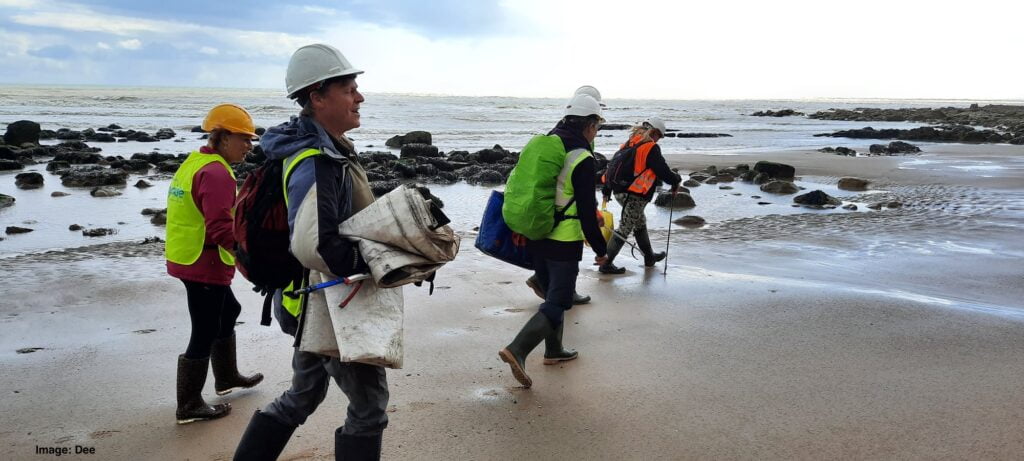
The rubbish is only accessible at low tide after a 30 minute walk (potentially in danger of being cut off), and so not too many people may know it is there. Our Strandliners beachcombing walk in January 2020 revealed the extent of the polystyrene lagoon.
2020 Survey
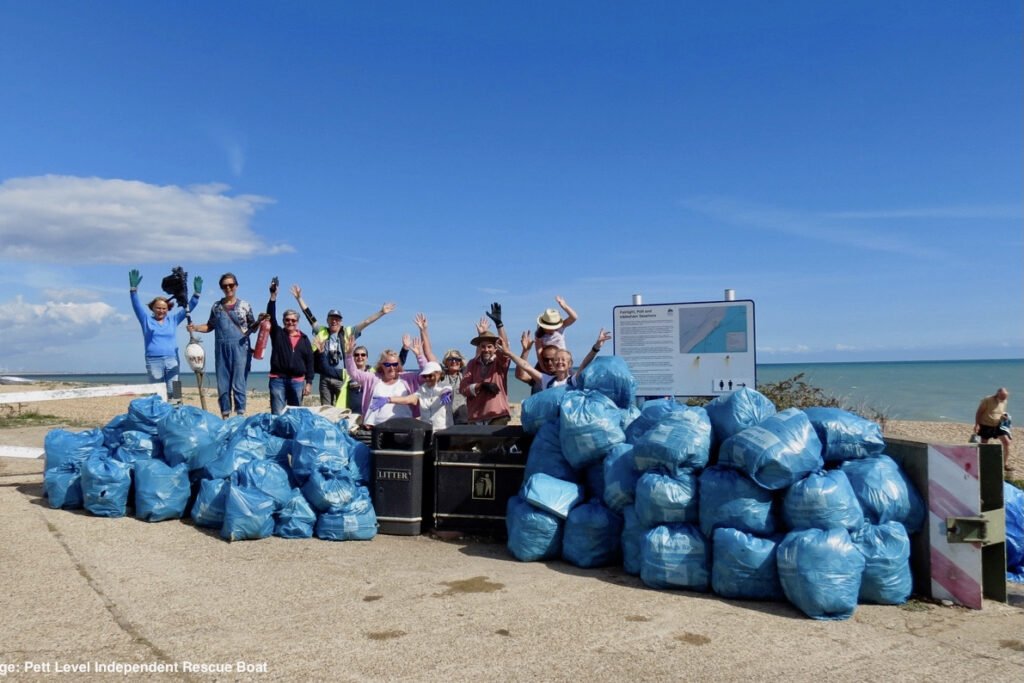
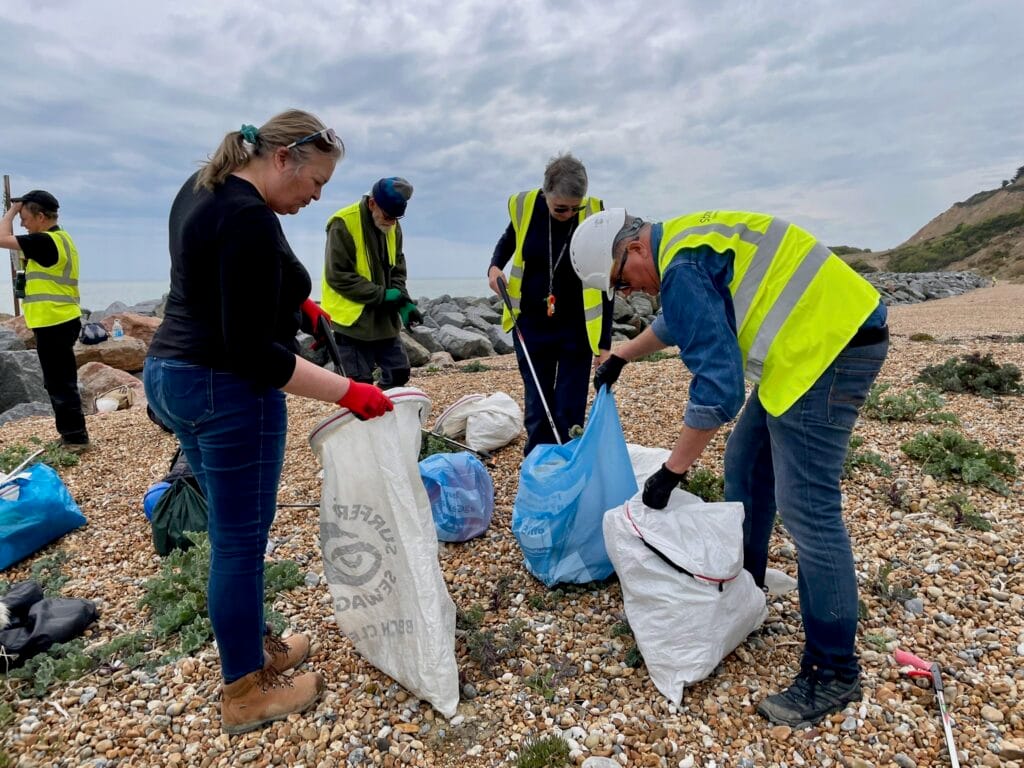
Our week of cleaning and recording sessions, postponed from earlier in the year due to the lockdown, finally went ahead during August and September. After eight sessions walking around the headland on a receding tide our wonderful volunteers gave 135 volunteer hours and cleared 107 bags totalling 367kg.
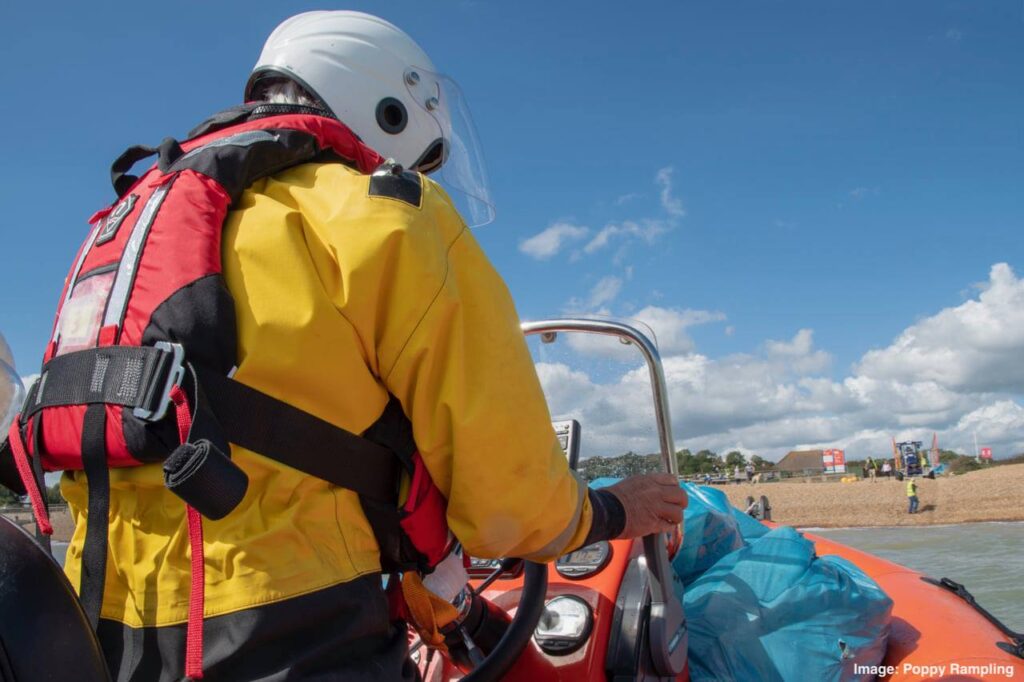
These events are not as glamorous as beach surveys as the historic rubbish was amongst mud, water and non-native plants. Indeed it may have been one of the hardest surveys yet. Once the rubbish was bagged and safely stored at various locations, the lifeboat crew used the rubbish as a training exercise and brought the bags at high tide to the Pett Level slipway to be picked up by Biffa.
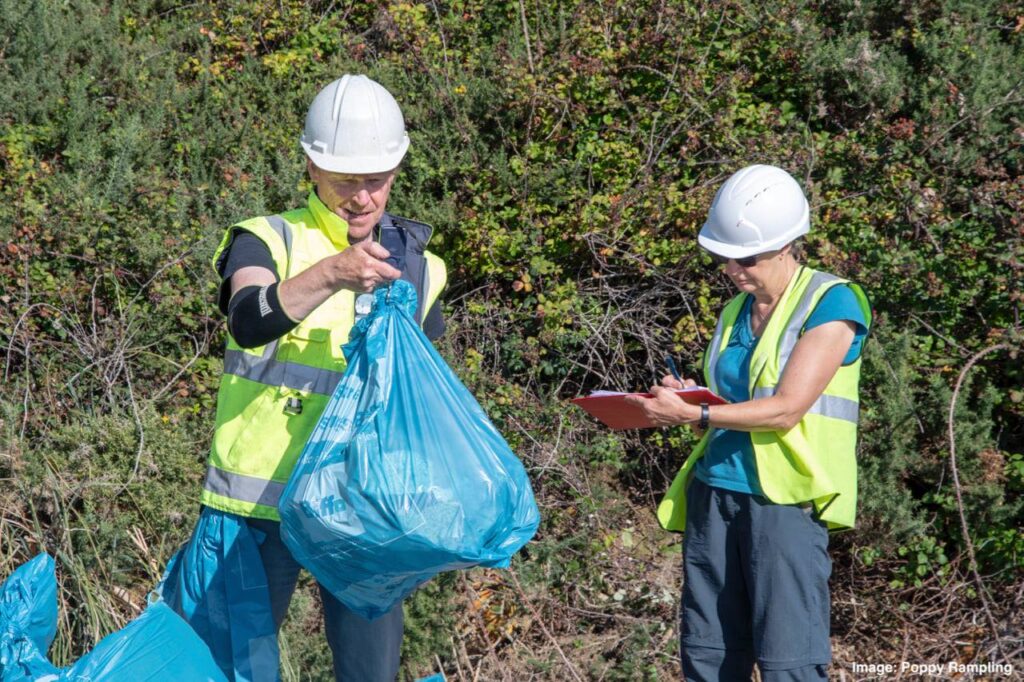
Due to the sheer volume of rubbish collected, we were unable to carry out a survey in the usual way, but separated everything into polystyrene, plastic bottles and general rubbish, much of which was also plastic.
Our survey found:
Polystyrene/foam: 146kg or 40% of the rubbish by weight
(mainly fishing related and remains of the fast food industry)
Plastic drinks bottles: 76kg or 21% of the rubbish by weight
(over 1,000 plastic bottles – we need a bottle deposit return scheme NOW!)
General rubbish: 145kg or 39% by weight
(very little obvious recent beach visitor litter)
2021 Survey
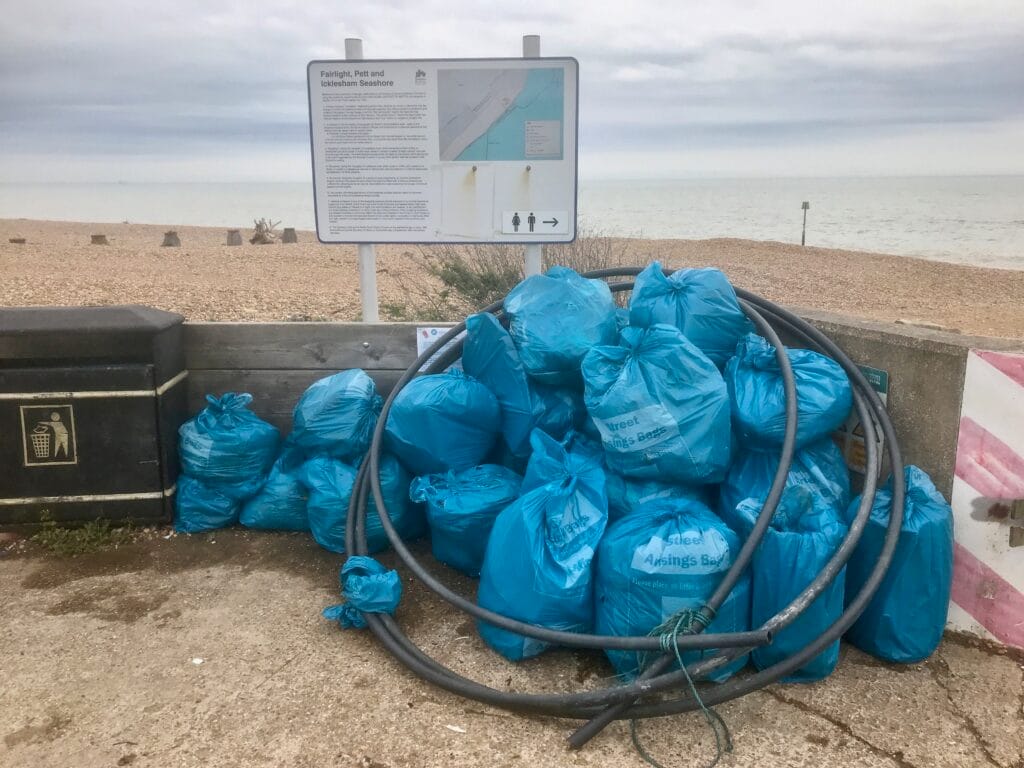
Following the success of the event the previous year, our intrepid team set out to clear and survey the rubbish from behind the berm again. We went out in six sessions to clear the length of the berm, with 8 to 15 volunteers at each, giving a total of 210 volunteer hours. Separated as before into polystyrene, plastic bottles and general rubbish. There were still many pieces of polystyrene to pick up, though they were getting smaller!
Our survey found:
Polystyrene/foam: 51 kg (24% by weight)
Plastic bottles: 25 kg (12% by weight)
General rubbish: 138 kg (64% by weight)
56 bags in total, weighing 214 kg.
2024 Survey
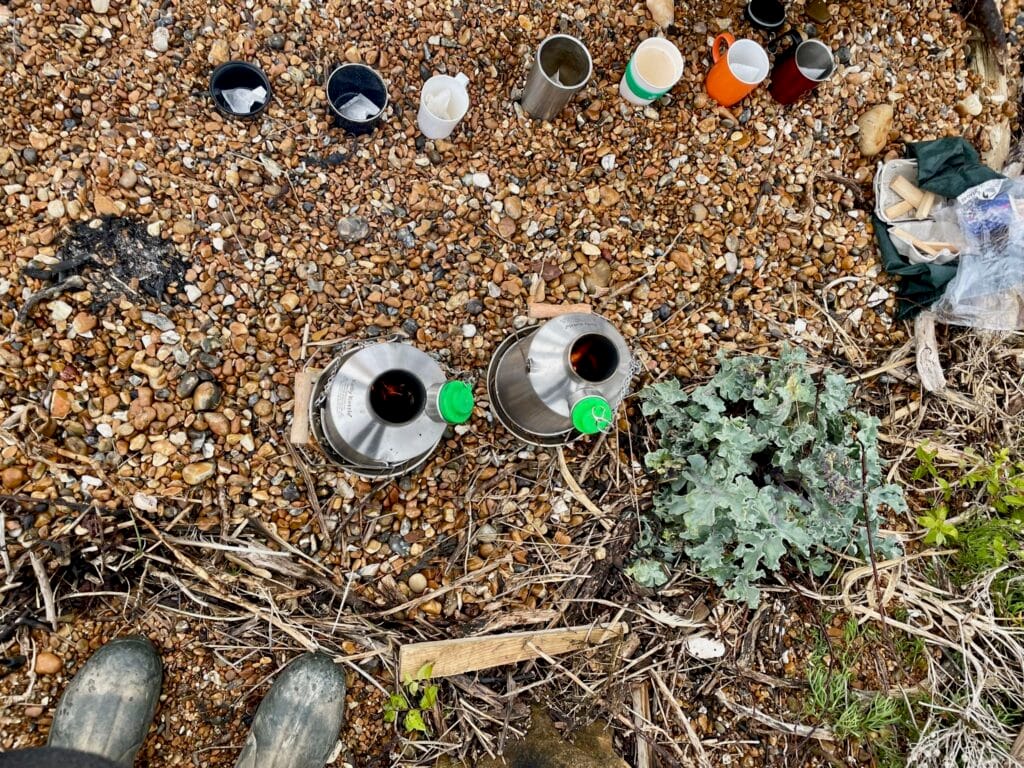
This time we decided to try something different and carry out the clean and survey in one go, walking out around the headland at low tide, and staying out all day until the time went back out. In the interests of civilisation, we brought along pleanty of cake and Kelly kettles to make tea! This time we counted not just plastic bottles, but all drinking containers. 10 volunteers gave 70 volunteer hours. You can watch a short video of the team setting out here on on our YouTube channel.
Our survey found:
Drinking containers: 194 drinking containers weighing 9.78 kg
Polystyrene/foam: 23.71 kg
General rubbish: 88.30 kg
38 bags in total, weighing 121.79 kg
2025 Survey
Although it was a very long day, we repeated the all day excursion format from 2024, and of course brought tea and cake. 12 volunteers gave 96 volunteer hours.
Our survey found
Drinking containers: 89 drinking containers, weighing 4.99 kg
Polystyrene/foam: 8.69 kg
General rubbish: 46.93 kg
30 bags in total, weighing 60.61 kg