
The recent container spills are the exceptions to the norm, as they have a point source, meaning they have a specific traceable source.
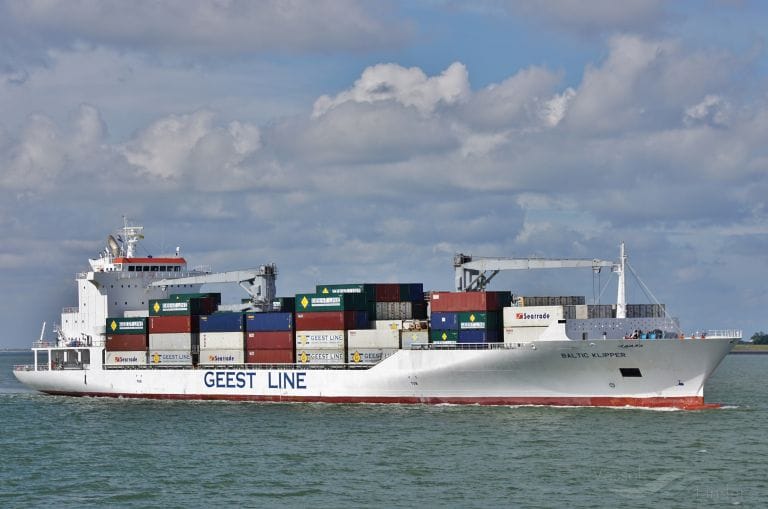
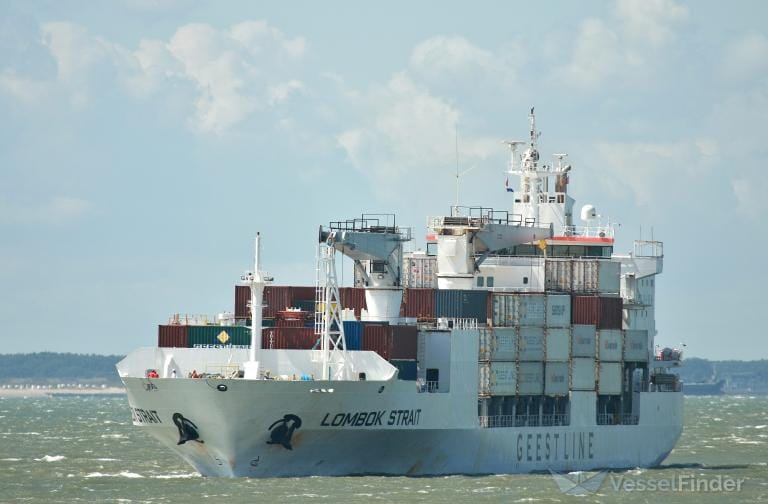
The 16 containers lost in December 2025 from the Baltic Klipper off the Isle of Wight that brought bananas to Selsey Beach, are an example. This incident was followed by 17 containers lost from the Lombok Strait and 7 empty containers lost from the Condor Valparaiso during Storm Goretti in January, resulting in a variety of goods strewn across our beaches in Sussex, from onions and garlic to frozen chips, along with foam insulation from the containers themselves.
As long as humans have been seafarers, there have been accidents at sea where ships and cargo have been lost to the waves. Once upon a time the resulting flotsam would have been natural materials, for example coal, wool and grain. This changed with the industrial revolution and the development of global markets, leading to larger and faster ships to carry produce around the world. After WW2, the increasing production of plastic, government subsidies, and persistent marketing created a massive explosion in the demand for products from across the world.
90% of all we own has been traded by sea and has spent time in a shipping container. Ships are still increasing in size; today some can carry 24,000 containers (holding the equivalent of around 1 billion cans of baked beans). Over 6,000 ships are in operation at any one time globally, carrying as many as 20 million containers between them.
In the twelve years up to 2020, an average of 1,382 containers fell overboard each year. The worst incident was the loss of all 4,293 containers from the MOL Comfort in the Indian Ocean in 2013. Most are lost through extreme weather, human error or structural failure.
There has been a recent (long-campaigned for) change in legislation. The International Maritime Organization introduced new regulations on 1st January; shipping companies must now report all containers lost at sea. Previously, they only had to do this if the contents were toxic or the lost containers were a hazard to shipping.
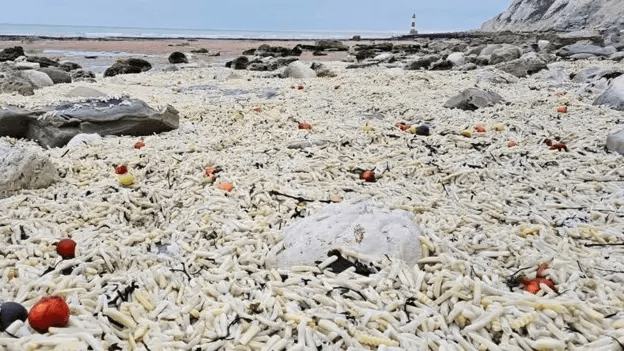
The immediate problem is the pollution from the containers and its removal to reduce the impact on the environment and local wildlife. There have been increased reports of stranded cetaceans, seals, fish and birds washed up on our beaches recently. The large quantities of chips and onions may decompose if they are left, but with what consequences for the ecosystem? The foam insulation will break up into smaller and smaller pieces. Who should bear the cost of cleaning up this pollution. Local communities and cash-strapped councils?
The shape of things to come may be more container spills through a greater fleet of larger ships working non-stop to cater for our needs, influenced by more frequent and more extreme weather events as our climate changes. We like all the things we buy. We’d probably also like to see our beaches less polluted. So what can we do? If we want to reduce plastic pollution, our most important objectives should be to buy local. If we can help to create greater local markets there will be less need to transport goods over large distances. Let’s support local producers and craftsmen, where good value food and commodities are produced (or repaired) locally. Who knows, this may even lead to happier, more connected communities
